
Review · KYOTO
Kyoto Cultural IKEBANA Experience@SEKKA FLOWERS
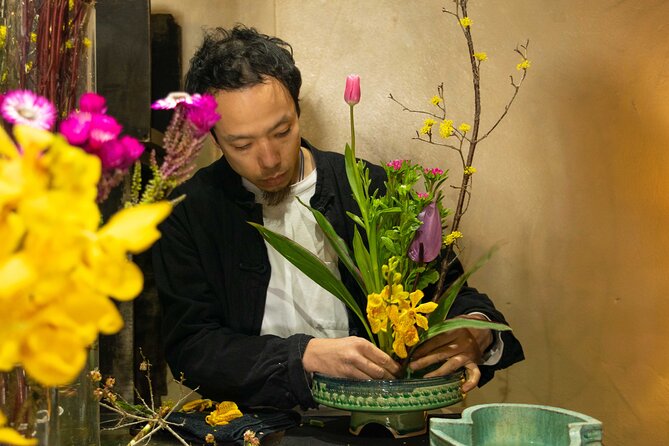
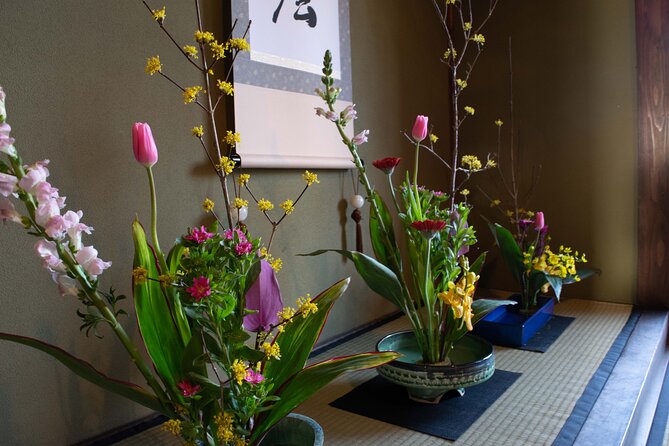
Ikebana here is not a quick craft project with a fixed result. You work with flowers and branches in their natural shapes, then create an arrangement guided by classical Japanese forms and the quiet idea of wabi-sabi. Your finished piece is displayed in a traditional tokonoma alcove.
I like the small maximum of six people, which gives the instructors room to guide you without taking over. I also like the setting: a flower shop in a renovated townhouse about 100 years old, close to Kinkaku-ji and Daitoku-ji. The main drawback is the short 40-minute duration. You will get a thoughtful introduction, but not a long formal course in ikebana.
Key points at a glance
- Classical ikebana in a traditional room: Create an arrangement based on older Japanese forms, then see it displayed in a tokonoma alcove.
- Small group size: The class accepts no more than six people, allowing for direct guidance and personal creative space.
- Seasonal flowers and branches: The lesson focuses on the changing beauty of Japanese flowers and the natural character of each stem.
- Friendly for beginners: You do not need previous flower-arranging experience to take part.
- Near Kyoto’s northwest sights: The meeting point is close to Kinkaku-ji and Daitoku-ji, making this easy to pair with sightseeing.
- Possible flower delivery: Arrangements have been delivered to participants’ accommodations afterward, letting you enjoy the work a little longer.
A quiet creative break near Kinkaku-ji
Kyoto can fill your day with temples, gardens, crowds, cameras, and a steady need to check the map. This ikebana class offers a different pace. For about 40 minutes, your attention turns to the line of a branch, the shape of a flower, and the space between them.
The experience takes place at SEKKA FLOWERS, a flower shop inside a renovated traditional townhouse. The building is about a century old, so the setting gives the class a clear sense of place without requiring a formal museum visit. You are not simply arranging flowers in a modern classroom. You are working in a Kyoto house with a style that suits the subject.
The location is in Kita Ward at 44-4 Murasakino Kamimonzenchō. It is near Kinkaku-ji Temple, the famous Golden Pavilion, and Daitoku-ji Temple, an important temple complex known for its Zen connections. The class can fit neatly into a day in this part of the city, though you should allow time to reach the meeting point and not assume it is inside either temple.
Other gardens people visit around Kyoto:
- Kyoto Zen Meditation & Garden Tour at a Zen Temple with Lunch
★ 5.0 · 441 reviews - Kyoto Arashiyama Bamboo forest & Garden Half-Day Walking Tour
★ 5.0 · 413 reviews - Authentic Kyoto Tea Ceremony: Camellia Flower Teahouse
★ 5.0 · 269 reviews
What the 40-minute class includes
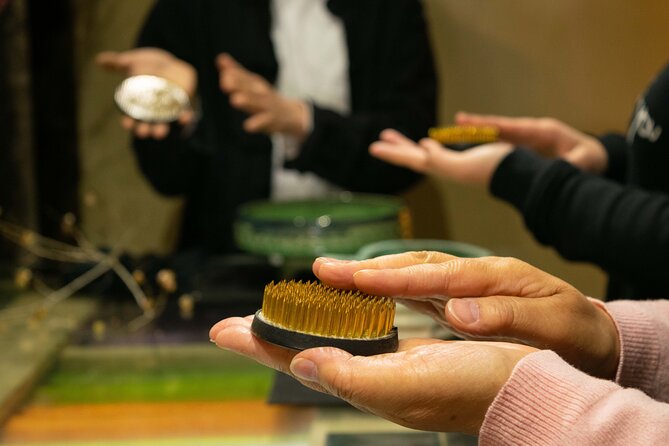
The session begins with an introduction to ikebana, its history, and its place in Japanese culture. You then work with flowers and branches selected to reflect the season. The point is not to force every stem into a tidy, symmetrical shape. Instead, you learn to notice what each piece of plant material already offers.
That approach is central to the experience. A bent branch, an uneven stem, or a flower opening in one direction can become part of the design. The arrangement respects the plant’s natural state rather than treating it as raw material to be corrected.
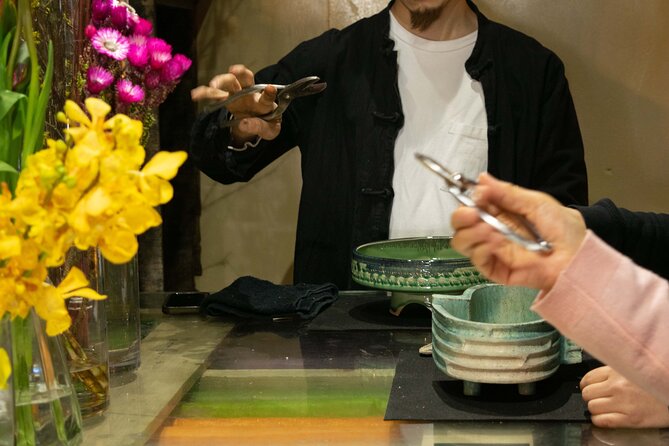
The class follows classical forms, but the instructors also leave room for your own choices. Taro-san and Chiaki-san guide participants through the principles while allowing them to make personal decisions. That balance matters. Too much instruction can turn ikebana into a rule test. Too little can leave you wondering what to do with the flowers in front of you.
The available information describes the session as welcoming to beginners. That makes it suitable for first-time visitors who want a cultural activity without needing background knowledge. You do not have to arrive with an artistic plan. The teacher’s role is to help you see the structure of an arrangement and then let you work within it.
At the end, your artwork is displayed in a tokonoma, the recessed alcove traditionally used in a Japanese room to show art, flowers, or calligraphy. This is a small but important detail. The arrangement is not treated as a disposable exercise. You get to see how it looks in the setting for which this kind of display was intended.
Understanding wabi-sabi through flowers
The class introduces the Japanese aesthetic of wabi-sabi. The term can be difficult to translate in a single phrase, but in this setting it points toward simplicity, imperfection, age, and the beauty of things that change.
You experience that idea through direct observation. A flower does not need to be perfectly open. A branch does not need to be straight. A little empty space can be as important as the flowers themselves. The result may feel less like filling a container and more like composing a small scene.
This is one reason the class can feel different from a standard flower-arranging workshop. The focus is not only on color matching or making a bouquet look full. You are encouraged to pay attention to line, balance, shape, and the natural character of the materials.
I would not book this expecting a long lecture on Japanese aesthetics. The session lasts only about 40 minutes, so the explanation has to stay focused. You should think of the class as an introduction you can feel with your hands, not a complete study of ikebana schools and traditions.
The value of a small group
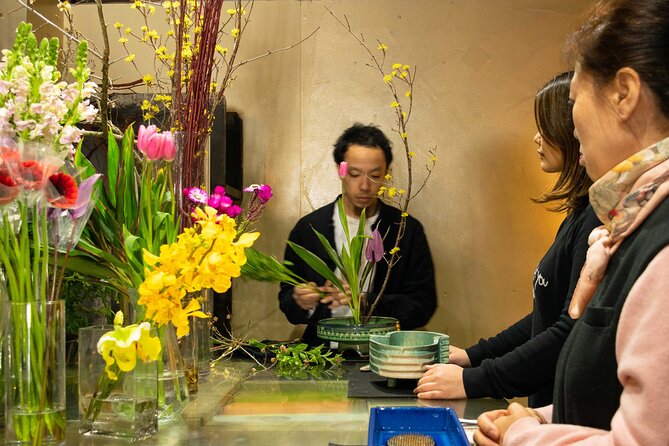
The maximum group size is six people. That is a useful feature for a hands-on class, since flower arranging can become frustrating if you have to wait for help or copy a demonstration from across a crowded room.
A small group also supports the informal tone described by participants. Taro-san and Chiaki-san are said to combine clear instruction with freedom to make your own arrangement. That means you can ask for help when a branch refuses to cooperate, then continue without someone constantly correcting every choice.
This format works well for couples, families, and solo visitors. One family used the class as a shared activity, with both adults and children enjoying the process. Children who can take part in a calm, focused craft may find the changing flowers more engaging than another temple explanation, though the supplied information does not specify a minimum age.
For couples, the class gives you something to do together rather than simply take another photograph. You can compare how each person responds to the same kind of material. For solo visitors, the small group means you are not left to manage the activity without support.
Same place, a different kind of green day out:
- Kyoto: Zen Garden, Zen Mind (Private)
★ 5.0 · 126 reviews - Kyoto Kiyomizu Tea Ceremony with Scenic Garden Views
★ 5.0 · 101 reviews - Kyoto: Private Tea Ceremony with a Garden View
★ 4.9 · 61 reviews - Bamboo Grove Temple and Garden Views Tour
★ 5.0 · 41 reviews
What makes the seasonal flowers important
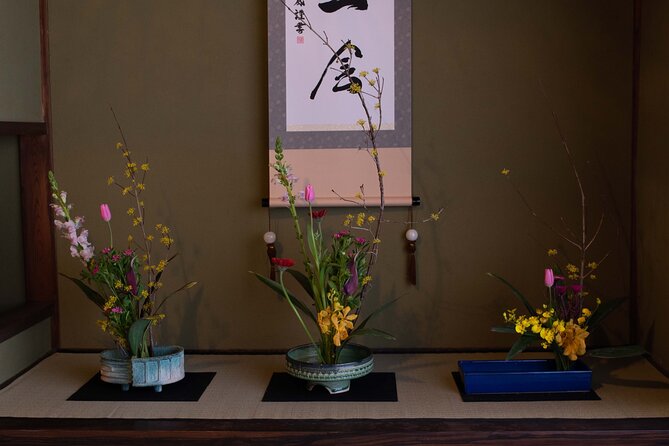
The flowers used in ikebana reflect Japan’s seasons. That gives the activity a changing character. The exact flowers and branches are not specified, so you should not book expecting a particular species or color. The materials will depend on what is appropriate and available at the time of your visit.
That uncertainty is part of the appeal. A class in spring will not be identical to one in autumn, and the arrangement you make will reflect the season rather than a fixed souvenir design. The branches may provide the main lines, while smaller flowers or leaves fill out the composition.
You also learn to work with what is in front of you. This makes the lesson more useful than a simple step-by-step activity. If you later buy flowers at home, you can apply the same attention to shape and spacing instead of trying to recreate one exact arrangement.
The practical result is a souvenir with a short life. Flowers fade. That is not a flaw in the experience. It fits the wabi-sabi idea that beauty changes and does not need to last forever. In this case, you may be able to enjoy the arrangement at your accommodation after the class, since flower delivery has been provided to participants. Confirm the delivery details when booking or on arrival, as the supplied information does not state that delivery is guaranteed for every booking.
How the location fits your Kyoto day
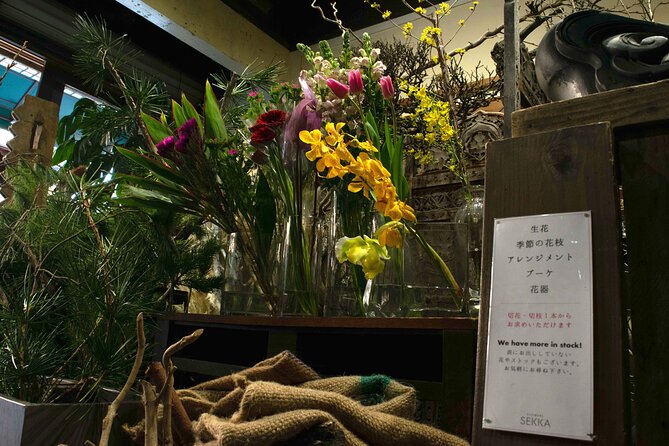
The class takes place near Kinkaku-ji and Daitoku-ji, two major reasons to visit northern Kyoto. The meeting point is close to public transportation, but the exact route and nearest station are not provided. Use the full address in your navigation app and leave enough time to find the townhouse.
I would pair the class with other sightseeing in the area rather than cross the city just for a 40-minute appointment. Kinkaku-ji is the obvious nearby stop, while Daitoku-ji offers a different temple experience. The class itself ends back at the meeting point, so it does not provide transport to either temple or another part of Kyoto.
There is a useful contrast between the surrounding sightseeing and the workshop. A temple visit usually asks you to look outward at buildings, gardens, and religious art. Ikebana asks you to slow down and notice small changes in shape and space. Scheduling the class between major sights can give your day a welcome reset.
Do check your timing carefully. Forty minutes is short, but the activity still needs a calm arrival. If you rush in from a distant part of Kyoto, the quiet mood may be harder to find.
Is $65.15 a fair price?
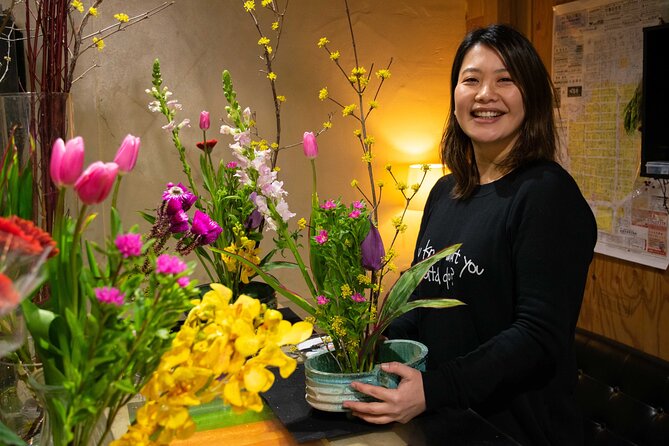
At $65.15 per person, this is not the cheapest way to spend 40 minutes in Kyoto. The value depends on what you want from a cultural activity.
You are paying for more than flowers. The price includes instruction, a small group setting, access to a traditional townhouse environment, seasonal materials, and the chance to display your work in a tokonoma. For someone who wants a personal, hands-on introduction to a Japanese art, those details make the cost easier to justify.
The value is stronger for couples or families who want a shared activity with a finished creation. It is also appealing if you have already seen several temples and want a quieter experience that involves doing rather than only looking.
The value is weaker if you want a long technical course, a large arrangement, or a formal lesson in one specific ikebana school. The 40-minute format gives you a taste of the practice, not advanced training. You should also remember that flowers are temporary, even if delivery to your accommodation lets you enjoy them for a little longer.
The activity is often booked about 35 days ahead. That suggests planning ahead is sensible, especially if you need a particular day or time. Confirmation is provided at booking, and free cancellation is available up to 24 hours before the start time. Changes or cancellations within 24 hours are not accepted for a refund.
Who should book this ikebana experience?
I would recommend this class to first-time visitors who want a manageable introduction to Japanese culture. You do not need artistic training, and the small group keeps the activity personal.
It is a good choice for:
- Couples looking for a calm shared activity
- Families whose children can take part in a quiet flower-arranging session
- Solo visitors who prefer guided cultural activities
- Anyone interested in Japanese design, flowers, or traditional rooms
- People staying near Kyoto’s northwest temples
- Visitors who want a short break from busy sightseeing
I would think twice if you dislike hands-on activities or want a highly structured performance with no personal choices. The instructors guide you, but you still have to make decisions about your own arrangement.
Service animals are allowed, and most people can participate. The experience is near public transportation, though detailed accessibility information is not provided. If you have specific mobility needs, contact the provider before booking rather than assuming the traditional townhouse will meet every requirement.
Should you book SEKKA FLOWERS?
Book it if you want to slow down, work with seasonal flowers, and learn an art form through direct practice. The strongest features are the six-person limit, the traditional townhouse, and the balance between instruction and creative freedom from Taro-san and Chiaki-san.
Skip it if 40 minutes feels too brief for the price or if you want advanced ikebana training. For most first-time visitors, though, the short format is also its advantage. It fits into a temple day, welcomes beginners, and gives you a personal connection to Kyoto that does not come from simply walking through another famous gate.
FAQ
Where does the ikebana experience take place?
It takes place at SEKKA FLOWERS, located at 44-4 Murasakino Kamimonzenchō, Kita Ward, Kyoto, 603-8217, Japan.
How long does the activity last?
The ikebana experience lasts approximately 40 minutes.
What will I do during the class?
You will learn about ikebana, work with seasonal flowers and branches, and create your own arrangement with guidance from the instructors.
Is the class suitable for beginners?
Yes. Beginners are welcome, and no previous ikebana experience is required according to the activity information.
How many people can join the class?
The activity has a maximum of six participants.
Who leads the experience?
The instructors include Taro-san and Chiaki-san.
Where does my finished arrangement go?
Your artwork is displayed in a tokonoma alcove during the experience. Flower arrangements have also been delivered to participants’ accommodations afterward, though delivery details should be confirmed for your booking.
Is the meeting point near Kyoto sightseeing?
Yes. The flower shop is approximately near Kinkaku-ji Temple and Daitoku-ji Temple, and it is also near public transportation.
Can I cancel for a full refund?
Yes. You can cancel at least 24 hours before the experience start time for a full refund. Cancellations or changes made less than 24 hours before the start time are not accepted for a refund.
Just added around Kyoto
- Kyoto-Nara Adventures Private Tour With Hotel Pick Up★ 4.0 · 5 reviews
- Ikebana Traditional Japanese Art of Flower Arranging★ 4.5 · 19 reviews
- Traditional Japanese Flower Styling Workshop – Ikebana in Kyoto★ 5.0 · 10 reviews
- Stunning Private Tea Ceremony: Camellia Garden Teahouse★ 5.0 · 28 reviews
- Kyoto Hidden Treasures: Special Temple & Garden Access Tour★ 4.5 · 25 reviews
- Zen Garden Making and Matcha Tasting in Handmade Pottery Shop★ 3.5 · 2 reviews
- Guided Kyoto City Cherry Blossom One Day Private Tour★ 5.0 · 16 reviews
- Kyoto: Kinkaku-ji Temple & Serene Garden Guided Tour with Tickets★ 5.0 · 9 reviews
Kyoto Garden Tours, compared.
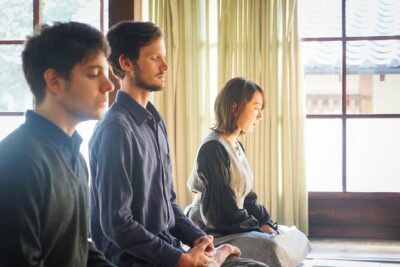
Kyoto Zen Meditation & Garden Tour at a Zen Temple with Lunch
Read our review →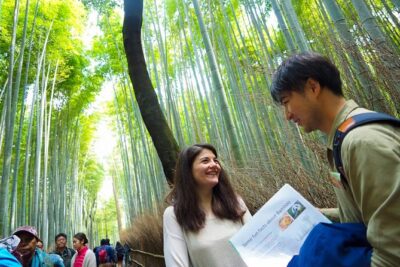
Kyoto Arashiyama Bamboo forest & Garden Half-Day Walking Tour
Read our review →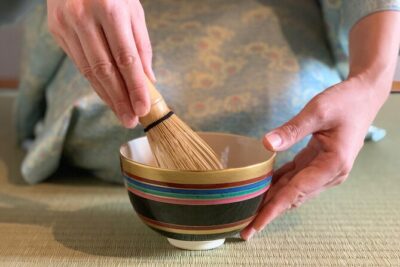
Authentic Kyoto Tea Ceremony: Camellia Flower Teahouse
Read our review →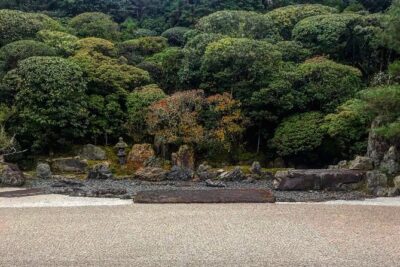
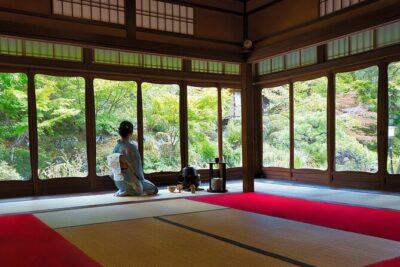
Kyoto Kiyomizu Tea Ceremony with Scenic Garden Views
Read our review →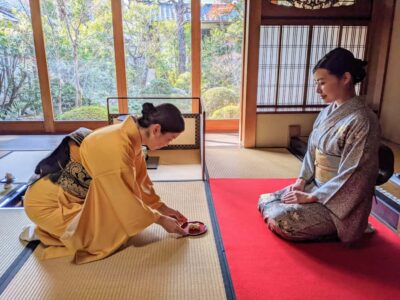
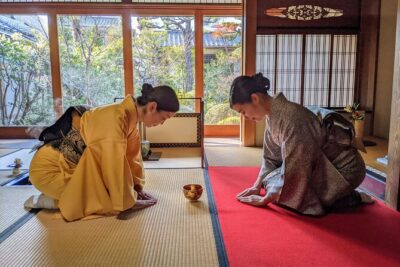
Stunning Private Tea Ceremony: Camellia Garden Teahouse
Read our review →Browse the lists this tour appears in