
Review · KYOTO
Kyoto: IKEBANA Private Program : enjoy the view of Kyoto!
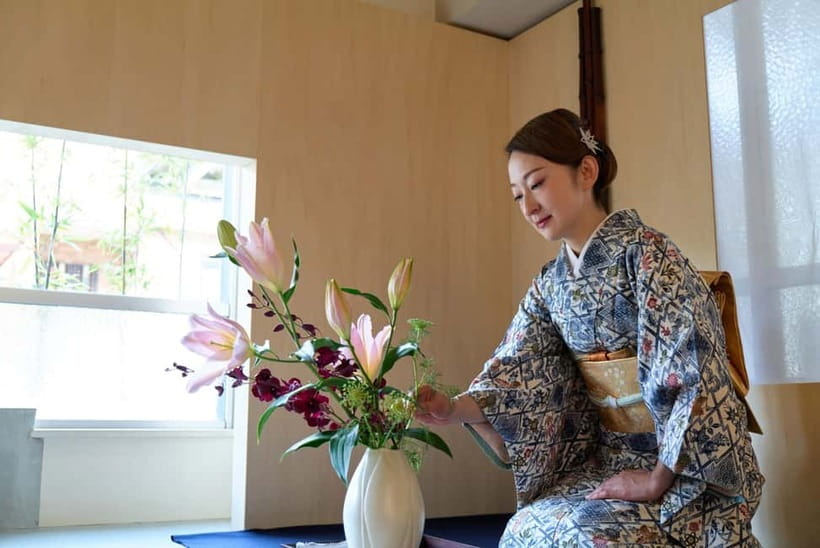
Kyoto’s ikebana class is more than a flower workshop. You begin at Kami Goryo Shrine, share a blessing, and then walk to Micché Kuramaguchi for a private lesson in a calm Japandi-style room. I like the personal format and the chance to take home flowers you have arranged yourself. I also like that the class explains practical choices, such as selecting a vase, rather than treating ikebana as a mystery.
The main drawback is the price: at $162 per person for 90 minutes, this is a premium cultural activity. You are paying for private instruction, fresh materials, several arrangement styles, and the rooftop visit, but budget-minded visitors may find the cost high for a short session.
Key points at a glance
- Begin at Kami Goryo Shrine: Meet beneath the large old paintings in the shrine’s Ema-dokoro before walking to the studio.
- Learn by watching first: An English-speaking instructor demonstrates ikebana and explains its principles before you make your own arrangements.
- Work with several styles: Use vases, a needle-point holder, baskets, and other vessels to create five or six forms of ikebana.
- Take flowers home: After the lesson, turn your materials into a bouquet you can carry with you.
- See Kyoto from above: The open roof offers a city view with Mount Daimonji and the surrounding mountains in the background.
- Enjoy a private class: The experience is designed for a private group, so the pace can focus on your choices and questions.
Meeting beside the shrine and walking into local Kyoto
Your meeting point is Kami Goryo Shrine in Kamigyo Ward, a five-minute walk from Kuramaguchi Subway Station. Use Exit 1, which is the easiest route, then look for the Ema-dokoro, the hall displaying large, old painted ema. This is a useful landmark because the shrine grounds contain several buildings and the meeting spot is not simply the main entrance.
The large framed ema have an appealing connection to Japanese history. In earlier periods, samurai dedicated painted boards to pray for victory, while scenes from Noh, mythology, and history also appeared. Later, smaller ema became common for everyday wishes such as family safety, business success, and children.
You do not need to study this background in advance. Still, arriving a few minutes early gives you time to find the hall and look around before the activity begins. The guide meets you there, and the program includes a blessing together at the shrine before you walk to the studio. That opening gives the class a stronger sense of place than a workshop that begins at a generic commercial room.
From the shrine, you continue to Micché Kuramaguchi. If you miss the exact start time, a 30-minute grace period is allowed, but I would not use that as a planning target. The shrine meeting point is specific, and finding an unfamiliar hall while rushed can take the calm out of the first part of the experience.
More Private Garden Tours in Kyoto:
- Kyoto: Zen Garden, Zen Mind (Private)
★ 5.0 · 126 reviews - Kyoto: Private Tea Ceremony with a Garden View
★ 4.9 · 61 reviews - Stunning Private Tea Ceremony: Camellia Garden Teahouse
★ 5.0 · 28 reviews
A private ikebana lesson in a Japandi-style room
The activity takes place on the first floor of a four-story, cream-colored building. At the entrance, look for a purple line with the atelier name, along with black and green bamboo planted on the facade. These details help you identify the studio without guesswork.
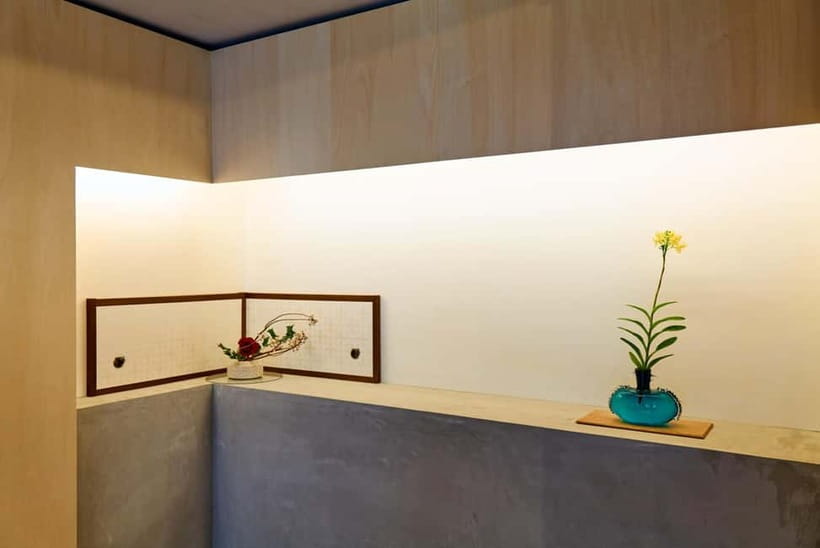
Inside, the arrangement demonstration happens in a modern Japandi-style alcove. You sit on a chair for the demonstrations and the practical work, which makes this suitable for anyone who would rather not sit on the floor. The room combines Japanese touches with a simpler modern design, and the setting helps connect ikebana with a style you could use at home.
The instructor begins with a demonstration. You see how the flowers are placed, how the shape is controlled, and how the arrangement creates space rather than simply filling a container. The lesson also explains how ikebana differs from Western flower arranging and how Japanese ideas of hospitality, balance, and restraint appear in the work.
The private format matters here. A one-on-one class can give you room to make your own choices without feeling that you are holding up a larger group. The instructor can guide your placement, then let you adjust the arrangement yourself. This balance is important because ikebana is not just a task to copy. You need enough direction to understand the structure, but enough freedom to see your own decisions take shape.
The class is taught in English. The supplied information names Michiko Ishiguro as the person presiding over Micché Kuramaguchi, while the lesson itself is delivered by a licensed instructor. No individual instructor name is provided for every booking, so if you want a particular teacher, ask when you reserve.
Five or six arrangements, not one quick flower exercise
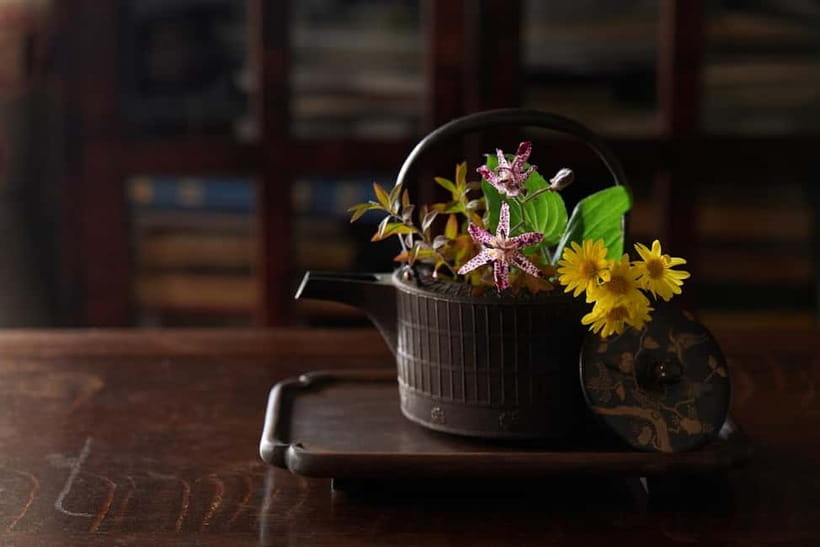
A useful feature of this program is its range. You work with traditional flower vases and a needle-point holder, then also try arrangements using baskets and other vessels. The session is intended to cover five or six types of ikebana, completed with the instructor’s help.
That variety makes the lesson more worthwhile than a simple cut-and-place demonstration. The container changes the shape of the work, and each vessel asks you to think differently about height, direction, balance, and the relationship between flowers and empty space.
You also learn how to select a flower vessel. This may sound like a small detail, but it is one of the most practical parts of the lesson. A beautiful arrangement can look wrong if the container is too large, too heavy, or at odds with the flowers. By discussing vessels, the instructor gives you something you can use after returning home, even if you never recreate a formal ikebana display.
Antique tools are used during the activity. Flower scissors and the materials needed for ikebana are supplied, including vases and vessels. You cannot take these tools home, and some are available for purchase, but the use of older equipment adds a direct connection to the craft.
Wear clothing you do not mind getting dirty. The flowers and working materials can mark your clothes, and you are advised to bring an apron if that would concern you. This is not a formal show where you only observe. You are handling plant materials and working at close range.
The value of fresh, seasonal flowers
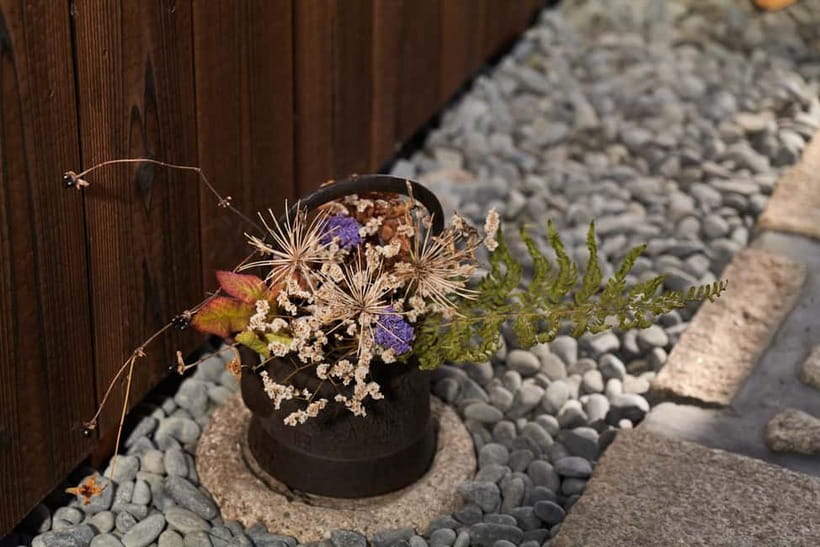
The flowers are fresh and seasonal, with different materials available for the lesson. That seasonal element is central to ikebana. The display is not meant to look identical throughout the year, and the flowers help connect the arrangement to the time of your visit.
You also get to choose from several ceramics and vessels. That choice gives you a more active role in the process. Instead of receiving one fixed container and following a set pattern, you can consider which shape works best for the flowers in front of you.
I like this part because it turns the class into a lesson in observation. You are not simply learning where to put a stem. You are considering what the material already offers and how a container can support it.
The instructor explains how ikebana expresses something distinctly Japanese. That does not mean you need to produce a perfect arrangement. The point is to understand the principles, notice the effect of a few deliberate stems, and learn how the display can bring seasonal awareness into a room.
Same place, a different kind of green day out:
- Kyoto Zen Meditation & Garden Tour at a Zen Temple with Lunch
★ 5.0 · 441 reviews - Kyoto Arashiyama Bamboo forest & Garden Half-Day Walking Tour
★ 5.0 · 413 reviews - Authentic Kyoto Tea Ceremony: Camellia Flower Teahouse
★ 5.0 · 269 reviews - Kyoto Kiyomizu Tea Ceremony with Scenic Garden Views
★ 5.0 · 101 reviews
Making a bouquet to take home
After the ikebana work, you use the flower materials to make a bouquet. You can take this bouquet home, which gives the short activity a useful afterlife.
This is different from taking home the formal arrangement. The vases, needle-point holders, scissors, and other tools remain with the studio, while your flowers are made into a portable bouquet. Plan accordingly. If you are moving to another hotel or taking a train soon after, flowers may be less convenient than a small craft souvenir.
Still, the bouquet is a welcome part of the price. You leave with something connected to your own work, rather than only a photograph or a certificate. The materials also help you remember the lesson in a more practical way when you try to arrange flowers again at home.
Rooftop views toward Daimoji
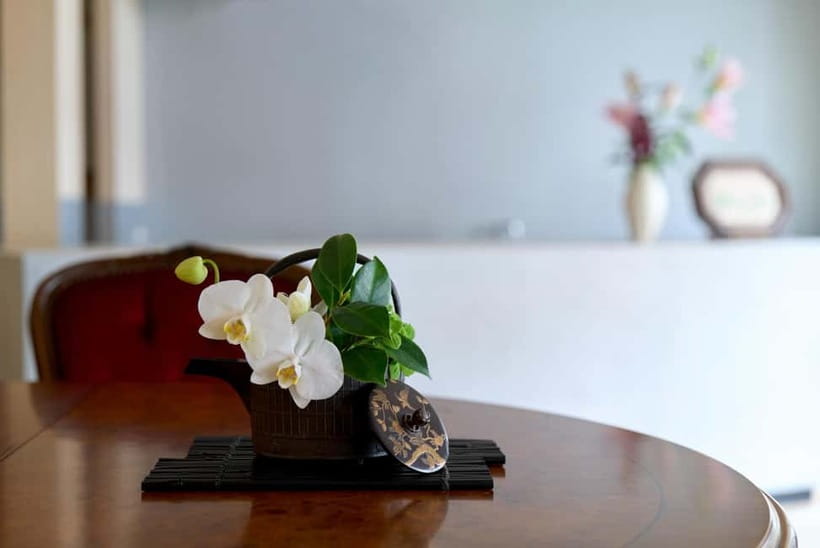
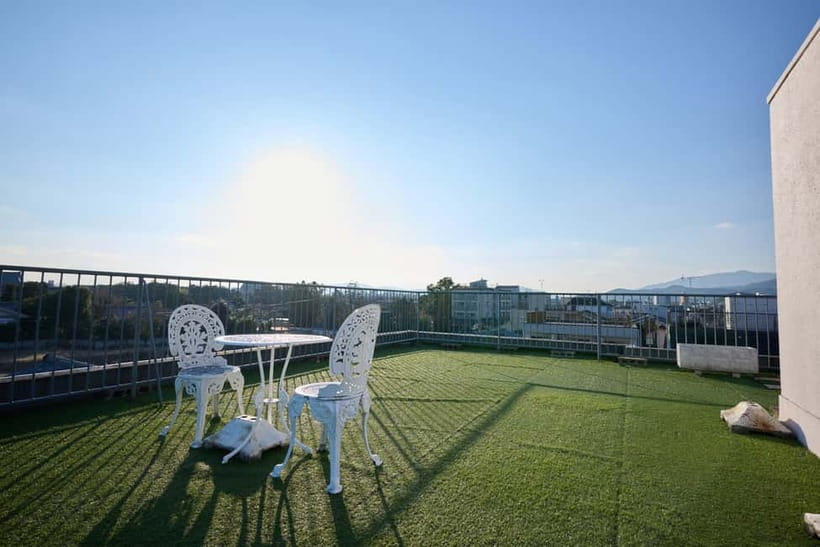
The final part takes you to the open roof of Micché Kuramaguchi. From there, you can see Kyoto’s calm cityscape and greenery around Kyoto Gyoen Garden, with Mount Daimonji and the surrounding mountains providing the main backdrop.
You take a commemorative photograph with the right and left Daimoji in view. This is a pleasant contrast to the quiet concentration of the flower lesson. The roof gives you time to step back, look across the city, and connect the small arrangement in your hands with the wider setting around you.
The rooftop is also used for tea parties and for watching the summer okuribi fires, but those are not part of this ikebana booking. Do not expect a tea ceremony here. Tea lessons are specifically excluded, and the activity focuses on flower arranging and the view.
The rooftop visit is weather-sensitive in a practical sense, even though no separate weather policy is provided. On a clear day, the mountains should be the visual reward. On a poor-weather day, the flower lesson remains the main event, so I would book this for the cultural instruction rather than for the rooftop photograph alone.
Is $162 a fair price for 90 minutes?
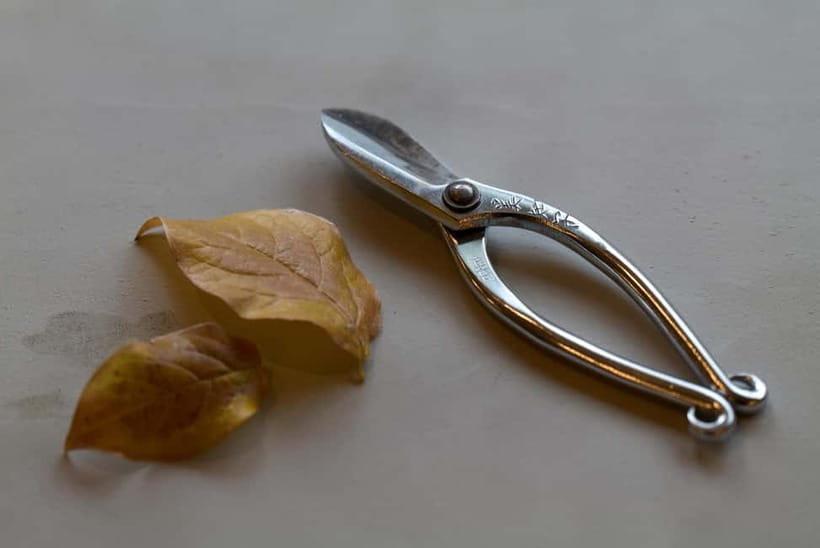
At $162 per person, this is not a bargain workshop. The cost includes the ikebana lesson, flowers, flower scissors, vessels, and other materials. It also includes a private group format, an English-speaking instructor, the shrine meeting and blessing, and the rooftop visit.
The price makes more sense if you value personal attention and want a focused introduction to Japanese culture. A private class can be especially useful for couples, families with older children, or solo visitors who prefer asking questions freely. The flowers and bouquet add something tangible, and the lesson covers several arrangements rather than one basic exercise.
The price is harder to justify if you mainly want a quick photo opportunity or a low-cost craft activity. Ninety minutes goes by quickly, and the tools do not come home with you. You are paying for the setting, instruction, materials, and private attention, not for a long workshop or a professional ikebana qualification.
I would compare this with the cost of other private cultural lessons in Kyoto rather than with a standard museum ticket. If you want a quiet, hands-on experience with a strong local focus, the fee may feel reasonable. If you are watching every yen, you may prefer a public garden, temple visit, or shorter demonstration.
Who will get the most from this experience?
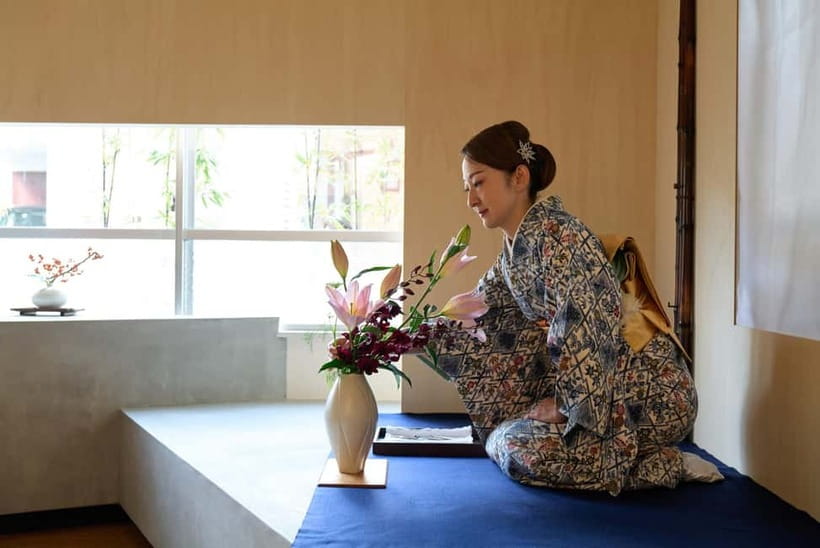
This program suits you if you enjoy making things with your hands and want more than a lecture about Japanese culture. It is also a good choice if you like flowers, ceramics, interior design, seasonal traditions, or photography.
The private format works well for couples and small private groups. It also helps if you are nervous about trying a traditional art in front of strangers. The instructor guides you but leaves room for your own choices, which keeps the lesson from feeling like a test.
The activity is wheelchair accessible, and all demonstrations take place with participants seated on chairs. Children under three are not accepted, and unaccompanied minors are not allowed. The upper age limit is 95, and the activity is not suitable for people with insect allergies.
Strong fragrances are not allowed, which is sensible in a flower studio and considerate of the materials. Weapons, smoking indoors, alcohol, drugs, fire-making, and nudity are prohibited.
Getting the most from your 90 minutes
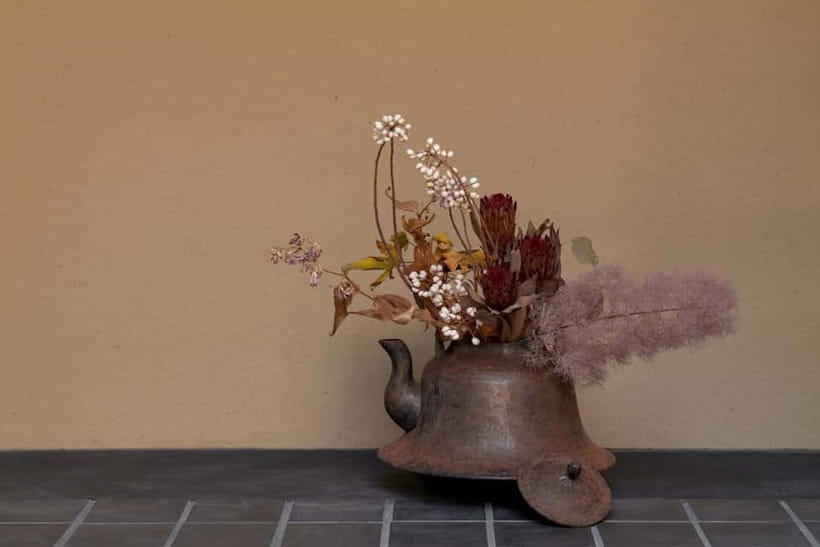
Use Kuramaguchi Station Exit 1 and allow time to locate the Ema-dokoro at Kami Goryo Shrine. The shrine meeting point is part of the experience, not just a transport detail.
Wear comfortable clothes and bring an apron if you are particular about keeping your clothing clean. You will work directly with flowers, scissors, vessels, and other materials.
Keep your schedule light after the class if you want to carry the bouquet comfortably. The flower materials can be taken home, but the tools and vases cannot.
If the rooftop view matters to you, check the forecast before choosing your day if your booking options allow it. The lesson has value on its own, but the photograph with Daimoji is the most weather-dependent part.
Should you book this Kyoto ikebana class?
Book it if you want a private, hands-on introduction to ikebana with seasonal flowers, several arrangement styles, English instruction, and a rooftop view. The opening at Kami Goryo Shrine and the take-home bouquet give the activity more character than a standard studio craft session.
Skip it if $162 feels too high for 90 minutes, if you want to take home the tools and vases, or if your main interest is tea ceremony. Tea is not included. For the right visitor, though, this is a thoughtful way to spend part of a Kyoto day: quiet, personal, practical, and tied to the city through the shrine, the flowers, and the view toward Daimoji.
FAQ
How long does the ikebana experience last?
The activity lasts 90 minutes.
How much does the experience cost?
The listed price is $162 per person.
Is the lesson private?
Yes. The activity is offered for a private group.
Is the instructor able to teach in English?
Yes. English is listed as the activity language.
Where do I meet the instructor?
Meet at Kami Goryo Shrine in Kamigyo Ward, inside the Ema-dokoro where the large framed ema are displayed.
How do I reach Kami Goryo Shrine?
The nearest station is Kuramaguchi Station on the Kyoto subway. Exit 1 is the most convenient, and the shrine is about a five-minute walk away.
Are flowers and ikebana tools included?
Yes. The lesson fee includes flower materials, and flower scissors, vases, vessels, and other ikebana materials are provided during the activity.
Can I take the flowers home?
Yes. After the lesson, you make a bouquet with the flower materials used during the experience, and you can take it home.
Is the tea ceremony included?
No. Tea ceremony lessons are not included in this activity.
Just added around Kyoto
- Kyoto-Nara Adventures Private Tour With Hotel Pick Up★ 4.0 · 5 reviews
- Ikebana Traditional Japanese Art of Flower Arranging★ 4.5 · 19 reviews
- Traditional Japanese Flower Styling Workshop – Ikebana in Kyoto★ 5.0 · 10 reviews
- Stunning Private Tea Ceremony: Camellia Garden Teahouse★ 5.0 · 28 reviews
- Kyoto Hidden Treasures: Special Temple & Garden Access Tour★ 4.5 · 25 reviews
- Zen Garden Making and Matcha Tasting in Handmade Pottery Shop★ 3.5 · 2 reviews
- Guided Kyoto City Cherry Blossom One Day Private Tour★ 5.0 · 16 reviews
- Kyoto: Kinkaku-ji Temple & Serene Garden Guided Tour with Tickets★ 5.0 · 9 reviews
Kyoto Garden Tours, compared.
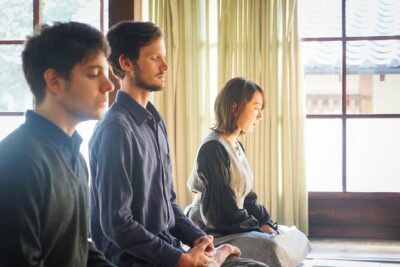
Kyoto Zen Meditation & Garden Tour at a Zen Temple with Lunch
Read our review →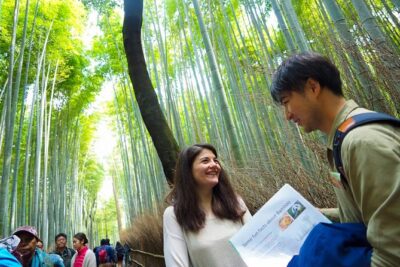
Kyoto Arashiyama Bamboo forest & Garden Half-Day Walking Tour
Read our review →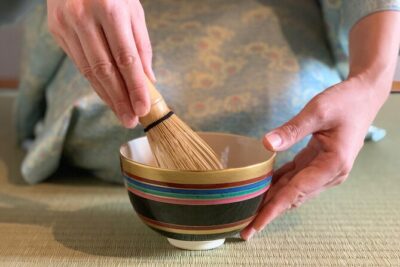
Authentic Kyoto Tea Ceremony: Camellia Flower Teahouse
Read our review →
Kyoto Kiyomizu Tea Ceremony with Scenic Garden Views
Read our review →
Stunning Private Tea Ceremony: Camellia Garden Teahouse
Read our review →Browse the lists this tour appears in