
Review · KYOTO
Kyoto: Nijo Castle & Gardens 2-Hour Guided Tour
Nijo Castle is one of Kyoto’s best places to connect grand architecture with real political history. In two hours, you’ll move from the Higashi-Ohtemon gate through palace rooms and gardens, with a guide explaining what you might otherwise miss.
I like the focused route and the chance to ask questions in a small or private group. I also like the personal detail a guide can add, such as Seana helping locate a floating peacock panel in Ninomaru Palace. One point to check: the tour’s Honmaru-goten Palace stop may not include the interior, even though the building opened to the public in September 2024.
Key points at a glance
- A compact two-hour route: See Nijo Castle’s main sights without giving up a full day in Kyoto.
- Ninomaru Palace deserves close attention: Guides can point out decorative details that are easy to miss on the standard path.
- A good guide adds context: Seana and Megumi received especially warm praise for their clear, polite, personal approach.
- Gardens balance the grand interiors: The walk gives you time among trees, ponds, stonework, and historic walls.
- Check the Honmaru Palace arrangement: The route includes Honmaru-goten Palace, but confirm if your booking includes its interior.
- The price is $54 per person: That is reasonable if you value explanation and questions, less so if you only want to walk the grounds.
Why Nijo Castle works so well in a short tour
Nijo Castle gives you several different Kyoto experiences in one place. You get the authority of a shogun’s former residence, carefully decorated palace rooms, defensive walls, and quiet garden paths. The contrast is the real pleasure: one minute you are studying formal architecture, and the next you are walking through open grounds with room to breathe.
The castle also has a clear connection to Japan’s political past. It began as a symbol of shogun power and later became an important place of cultural preservation. You do not need to be a specialist to enjoy that story. A good guide turns the buildings from pretty backdrops into places with purpose.
Two hours is a sensible length for this introduction. Nijo Castle is substantial, but a tight schedule helps you focus on its strongest features. You will not receive an exhaustive study of every wall, room, or plant. Instead, you get a guided orientation that helps you understand what deserves a closer look if you return on your own.
This is a UNESCO World Heritage site, and that status matters here because the tour is not just about taking photographs. The castle’s architecture, gardens, and political role all form part of Kyoto’s cultural identity.
A few more garden visits around Kyoto worth a look
- Bangkok: 2-Hour Dinner & Shows on White Orchid River Cruise
★ 3.9 · 897 reviews - Bali Luxury Spa Massage and flower Bath 2 hour Treatmen
★ 4.5 · 167 reviews - Bali: Luxury Spa Balinese Massage scrub Flower bath 2 Hour
★ 4.9 · 77 reviews
Meeting your guide at the Higashi-Ohtemon gate
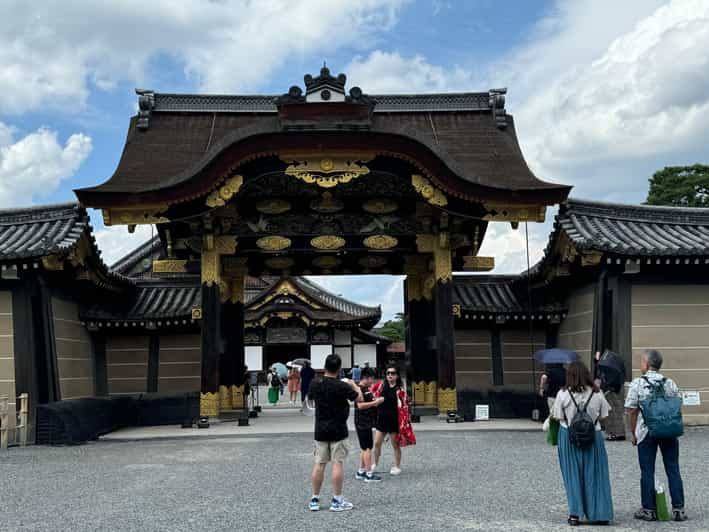
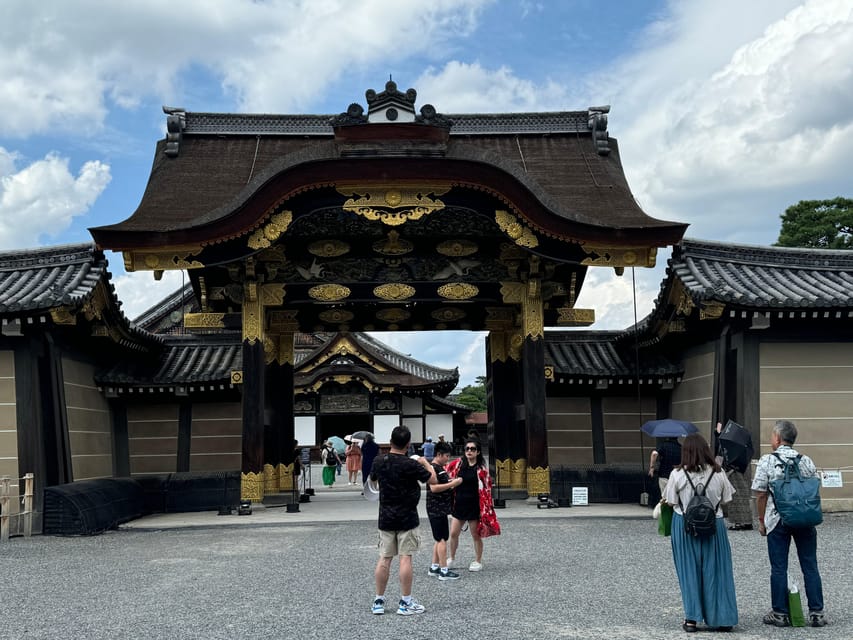
The meeting point is in front of the ticket counter near the Higashi-Ohtemon main gate. Look for the guide holding a yellow sign with the DeepExperience logo. That detail is useful because castle entrances can feel busy, and a clear sign saves time at the start of a short tour.
The listed starting location also refers to the Nijo Castle parking office, but your practical meeting point is the ticket counter near the main gate. Arrive with enough time to find that area before the scheduled start. A two-hour visit has little room for a slow beginning.
The tour is offered in English, with a live guide. You can book a private group or a small group, depending on availability. That choice affects the feel of the visit. A private group gives you more freedom to pause and ask questions. A small group can offer much of the same personal attention while keeping the cost manageable.
I would choose the smaller format if you want historical explanation but do not need a fully tailored route. Choose private if your group has a particular interest in architecture, palace decoration, or the castle’s role in Japanese government.
First look at the castle and its grand architecture
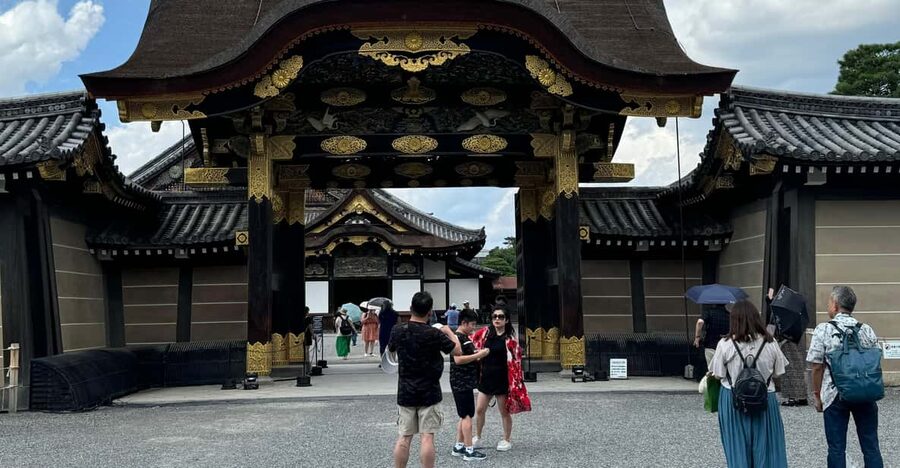
The early part of the visit focuses on Nijo Castle itself, including a short photo stop and guided introduction. This is when your guide can give you the basic framework: why the castle was built, how it expressed shogun authority, and how the structures fit together.
The architecture is the immediate draw. Nijo Castle’s formal buildings were designed to make power visible. Rooflines, gates, timber construction, painted panels, and controlled movement through the grounds all contribute to that effect. Your guide’s job is to help you read those details rather than simply pass them by.
This opening section is short, but it matters. Without context, you may see a beautiful old complex. With context, you begin to notice how the buildings guided people, separated public and private space, and communicated rank.
It is also a good time to ask how the route will handle Honmaru-goten Palace. The activity description gives that palace a major place in the visit, but the actual interior access deserves confirmation before you book. A recent booking account specifically wished the tour had included the inside of Honmaru Palace, which suggests that the stop may sometimes mean viewing the building and grounds rather than entering every interior room.
Ninomaru Palace rewards a slower look
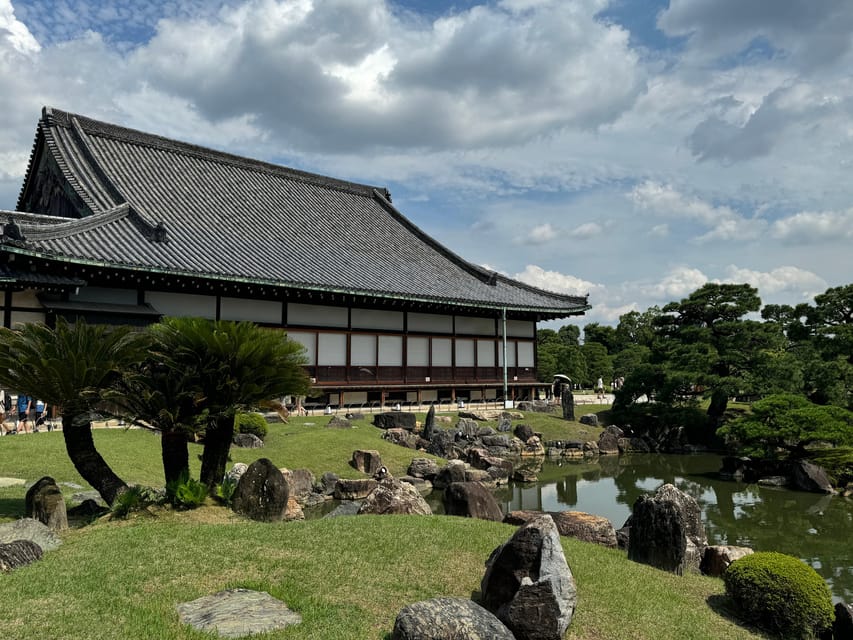
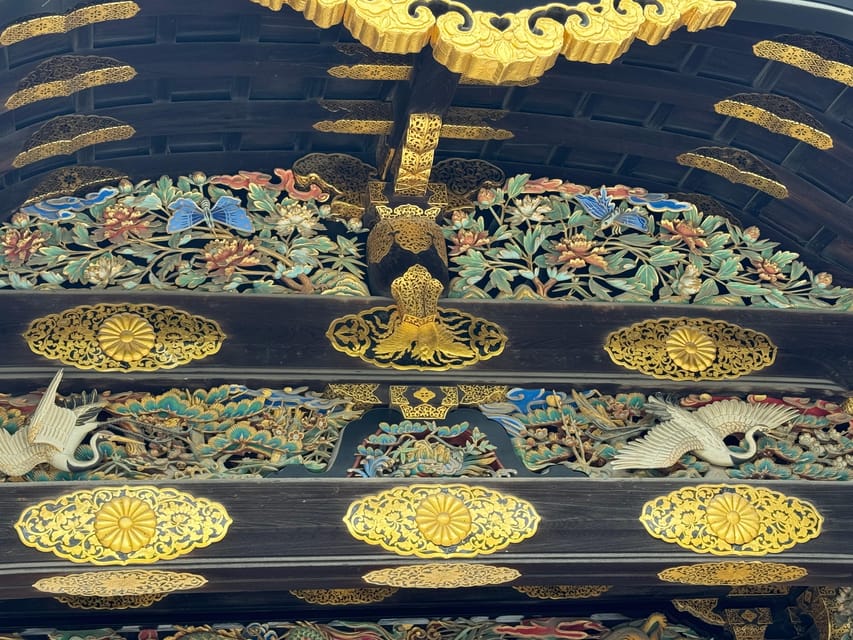
Ninomaru Palace is likely to be the most rewarding part for travelers interested in interiors and decoration. The palace gives you a chance to see how art and architecture worked together in a formal residence. Painted panels and carefully arranged rooms are not random decoration. They helped create an atmosphere of authority and ceremony.
This is where a guide can make a real difference. On your own, you may follow the route and admire the broad effect. With guidance, you can stop to examine a particular panel, room, or visual detail and understand why it matters.
One especially useful example comes from the experience with Seana. She helped locate a floating peacock panel in Ohiroma Ni-no-ma, the second room of the main audience area. The panel is not easy to spot from the usual path, so finding it became a small shared discovery. Because Seana speaks Japanese, she and her group could ask palace staff for help.
That story points to the best reason to book a guide: not simply to hear prepared facts, but to have someone who can respond to your curiosity. You can ask about a detail, pause where something catches your eye, or request help finding a feature that is easy to overlook.
The palace visit is also a reminder to pace yourself. You may be tempted to move quickly through a sequence of rooms, especially if there are other people nearby. Slow down enough to notice the decorative program. The visual impact comes from the combined effect of the rooms, not from one single object.
Same place, a different kind of green day out:
- Kyoto Zen Meditation & Garden Tour at a Zen Temple with Lunch
★ 5.0 · 441 reviews - Kyoto Arashiyama Bamboo forest & Garden Half-Day Walking Tour
★ 5.0 · 413 reviews - Authentic Kyoto Tea Ceremony: Camellia Flower Teahouse
★ 5.0 · 269 reviews - Kyoto: Zen Garden, Zen Mind (Private)
★ 5.0 · 126 reviews
Honmaru-goten Palace needs a little clarification
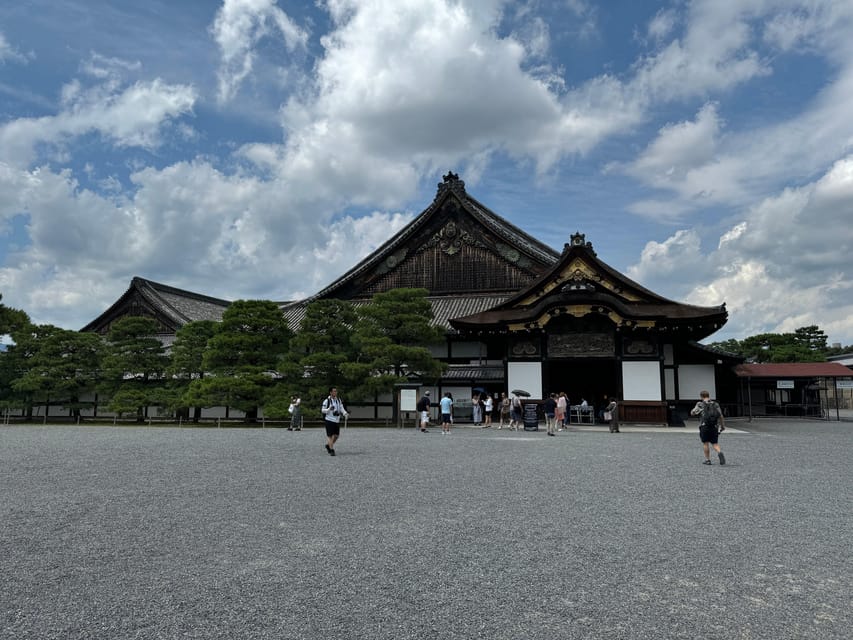
The planned route includes a guided visit to Honmaru-goten Palace, with a substantial portion of the tour assigned to it. Honmaru is important because it gives the castle another architectural and historical focus beyond Ninomaru.
However, you should ask a direct question before booking: Does the tour enter the Honmaru Palace interior on my date? The building has been open to the public since September 2024, yet one recent booking account noted that the tour did not include an inside visit and described the interior as worth seeing.
This is the clearest limitation of the experience. If you are mainly paying to enter Honmaru Palace, you need an exact answer from the provider. If your priority is a guided overview of the whole castle, the stop can still be useful even if it remains an exterior viewing point.
The distinction matters because two hours passes quickly. You may not have enough free time after the guided route to arrange a separate interior visit. Confirming the plan in advance will help you set realistic expectations.
Gardens and grounds provide the needed pause
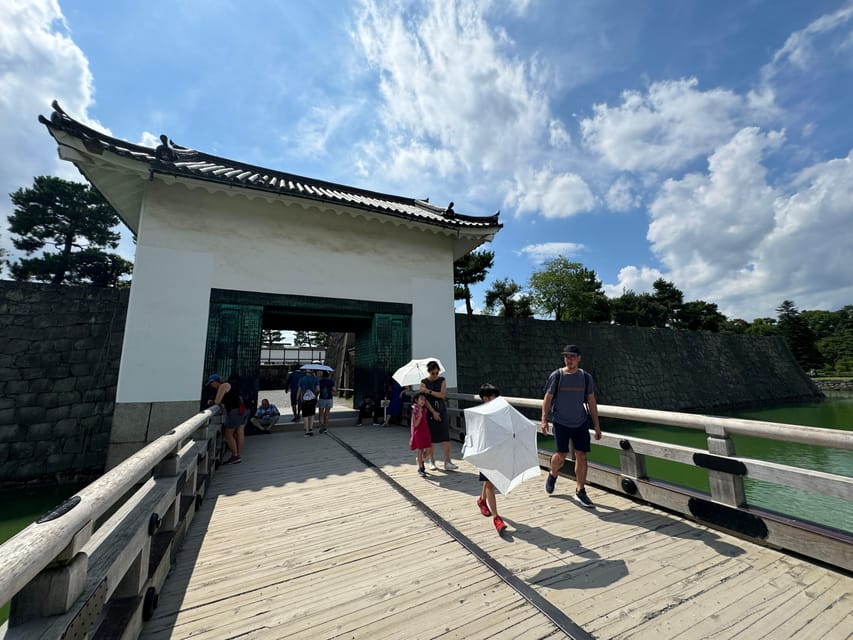
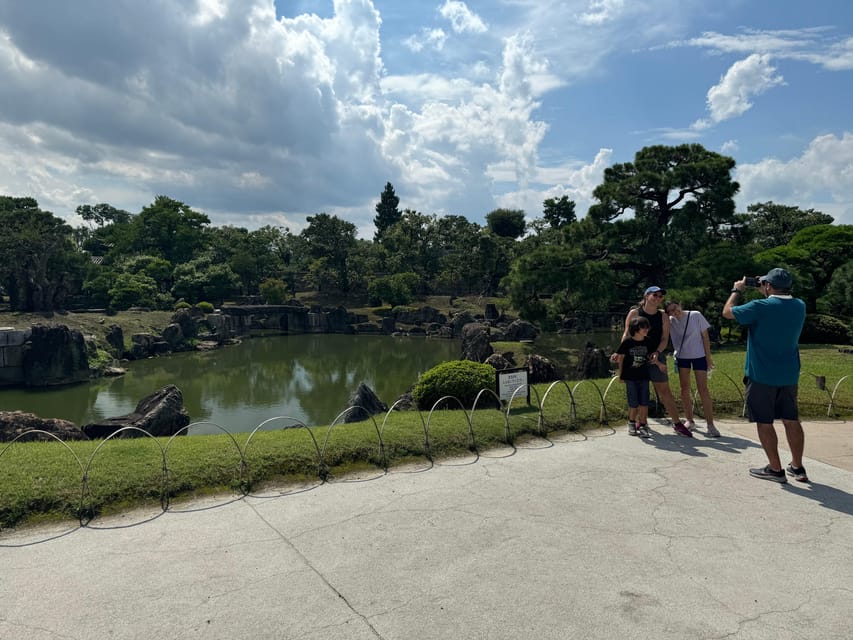
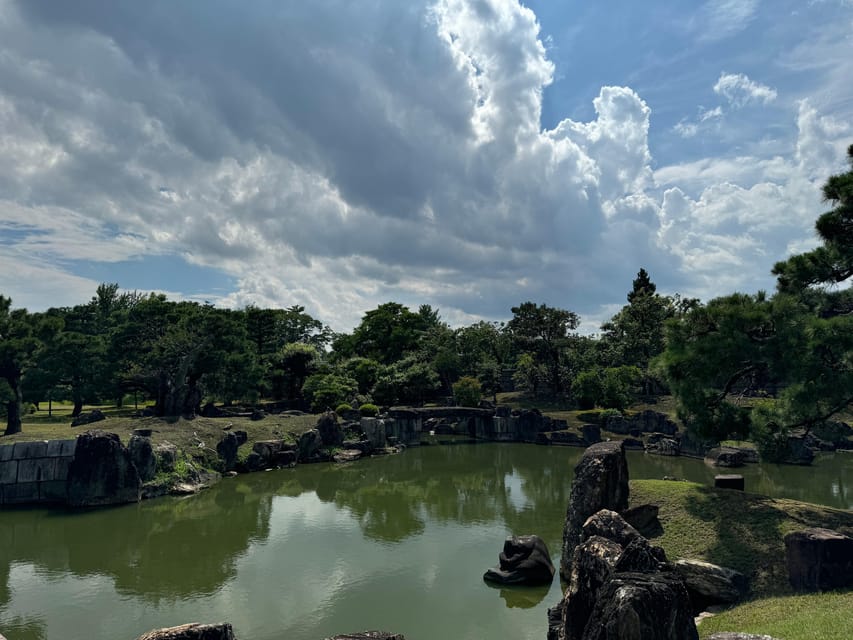
After the formal palace spaces, the tour continues through Nijo Castle’s historic grounds and gardens. This part keeps the experience from becoming a sequence of indoor rooms. You get time to walk, take photographs, and appreciate how the castle’s natural setting supports its architecture.
The gardens offer a quieter mood than the palace. Paths, greenery, water, and stone features create a controlled sense of calm, while the castle walls and traditional buildings keep the setting firmly historical. You might find that this is where the visit feels most spacious.
The garden walk is listed as sightseeing and walking, with time to return toward the main gate. That makes comfortable shoes a sensible choice. The route is not presented as a strenuous hike, but you will be on your feet for most of the two hours.
Photography is another strong part of the grounds. The castle’s buildings provide formal compositions, while the gardens offer softer scenes. If you want good photographs, use the guided sections to understand the site, then take advantage of the pauses outdoors rather than trying to photograph every detail while the group is moving.
What the guides add to the experience
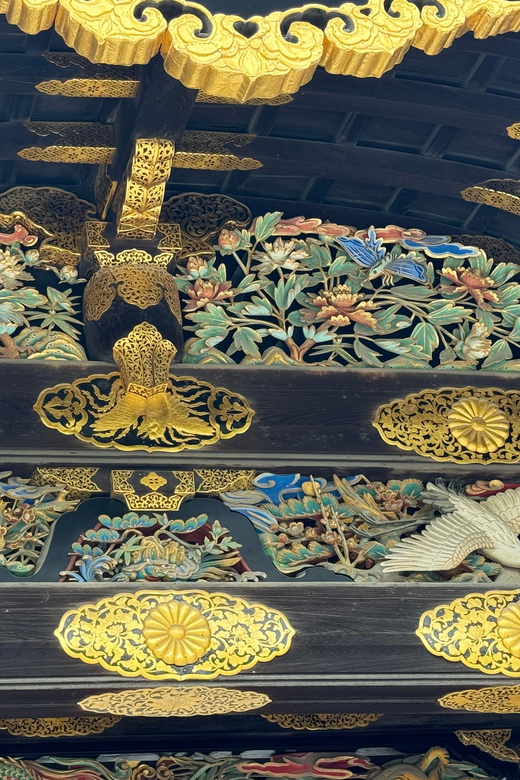
The guide quality is central to this tour. You are not booking transportation or a long sightseeing circuit. You are paying for interpretation, direction, and the chance to ask questions in a place with many details.
Seana made a strong impression by sharing detailed stories in a personal way and by helping investigate the floating peacock panel. Her ability to speak Japanese also helped when asking castle staff for assistance. That does not mean every guide will offer the exact same interaction, but it shows the value of a flexible guide who responds to your interests.
Megumi was praised for being informative and polite. Those qualities fit this setting well. Nijo Castle calls for explanation, but the visit should not feel like a lecture. A clear and courteous guide can give you the background, then leave room for observation and questions.
The English-language service is useful for first-time visitors who want more than labels and signs. You will learn the castle’s place in Japan’s past, its connection to shogun power, and the meaning behind selected architectural details. The experience is less useful if you prefer to wander silently at your own pace.
Is $54 good value for two hours?
At $54 per person, this is not the cheapest way to enter Nijo Castle. Your fee includes admission and the guide fee, so you are paying for both access and explanation.
I think the value is good for three kinds of visitors. First, it suits anyone with only a short block of time in Kyoto. Second, it works for people who enjoy architecture but want help understanding what they see. Third, it is a sound choice for a private or small group that wants to ask questions without being part of a large crowd.
The value is less clear if you already know Nijo Castle well or prefer independent sightseeing. The grounds and buildings can be enjoyed without a guide, and two hours may feel restrictive if you want to explore every corner.
The best way to judge the price is to ask what you would otherwise miss. If a guide helps you notice the floating peacock panel, explains the role of Ninomaru Palace, and puts the castle’s political story into focus, the fee buys more than admission. If the guide simply leads you from one stop to the next, the price will feel high.
The high overall rating of 4.7 from three verified bookings supports the tour’s appeal, but the small number of ratings means you should treat it as a useful signal, not a guarantee. The specific strengths are clear: polite guides, detailed stories, and attention to small features.
Who should book this Nijo Castle tour?
I would recommend it to first-time Kyoto visitors who want a clear introduction without spending half a day at the castle. It also fits couples, families, and small groups who prefer conversation over a fixed audio guide.
History and architecture fans should find plenty to enjoy, especially in Ninomaru Palace. Photographers will appreciate the mix of formal buildings and garden views, though the schedule leaves limited time for a slow personal photo session.
This may not suit you if your main goal is an unhurried garden walk or a guaranteed interior visit to Honmaru Palace. In that case, confirm the access arrangements first or allow separate time for the palace.
You should also think about your preferred touring style. The route is structured and guided, but the small or private format gives you more room to ask questions. The better your questions, the more useful the two hours can become.
Booking details worth knowing before you go
The tour lasts two hours and is offered at different starting times depending on availability. English is the stated tour language. Private and small-group formats are available.
You can cancel up to 24 hours in advance for a full refund. The reserve-now, pay-later option lets you hold a place without paying immediately, which is helpful when your Kyoto plans are still changing.
Admission to Nijo Castle and the guide fee are included. The provider is DeepExperience, Inc. Your guide should be holding the yellow DeepExperience sign near the ticket counter by Higashi-Ohtemon gate.
Ask specifically about Honmaru-goten Palace before finalizing your booking. That single question can determine whether the tour matches your expectations.
Should you book this tour?
Book it if you want a focused introduction to Nijo Castle, value a live English-speaking guide, and enjoy noticing details such as the floating peacock panel in Ninomaru Palace. The two-hour format works well between other Kyoto plans, and the private or small-group option can make the experience feel personal.
Think twice if you want unrestricted time or if entering Honmaru Palace is your main reason for going. Confirm that point first. For most first-time visitors who want the castle’s architecture, gardens, and political story explained in a compact visit, $54 is a fair price for the added context.
FAQ
How long is the Nijo Castle guided tour?
The tour lasts two hours.
What language is the tour offered in?
The live tour guide service is offered in English.
Where is the meeting point?
Meet in front of the ticket counter near the Higashi-Ohtemon main gate. The guide will hold a yellow sign with the DeepExperience logo.
Is admission to Nijo Castle included?
Yes. The price includes admission to Nijo Castle and the guide fee.
Does the tour include Ninomaru Palace?
Yes. The route includes a guided visit to Ninomaru Palace, where you can examine palace rooms and decorative details.
Does the tour include the inside of Honmaru Palace?
The route includes Honmaru-goten Palace, but the provided information does not confirm that every tour enters the interior. Ask the provider before booking, especially because the palace opened to the public in September 2024.
Can I book a private group?
Yes. Private and small-group options are available.
Can I cancel for a full refund?
Yes. You can cancel up to 24 hours in advance for a full refund. You can also reserve now and pay later.
Just added around Kyoto
- Kyoto-Nara Adventures Private Tour With Hotel Pick Up★ 4.0 · 5 reviews
- Ikebana Traditional Japanese Art of Flower Arranging★ 4.5 · 19 reviews
- Traditional Japanese Flower Styling Workshop – Ikebana in Kyoto★ 5.0 · 10 reviews
- Stunning Private Tea Ceremony: Camellia Garden Teahouse★ 5.0 · 28 reviews
- Kyoto Hidden Treasures: Special Temple & Garden Access Tour★ 4.5 · 25 reviews
- Zen Garden Making and Matcha Tasting in Handmade Pottery Shop★ 3.5 · 2 reviews
- Guided Kyoto City Cherry Blossom One Day Private Tour★ 5.0 · 16 reviews
- Kyoto: Kinkaku-ji Temple & Serene Garden Guided Tour with Tickets★ 5.0 · 9 reviews
Kyoto Garden Tours, compared.
Kyoto Zen Meditation & Garden Tour at a Zen Temple with Lunch
Read our review →
Kyoto Arashiyama Bamboo forest & Garden Half-Day Walking Tour
Read our review →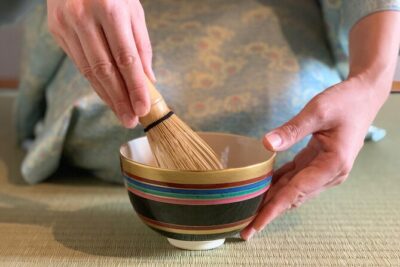
Authentic Kyoto Tea Ceremony: Camellia Flower Teahouse
Read our review →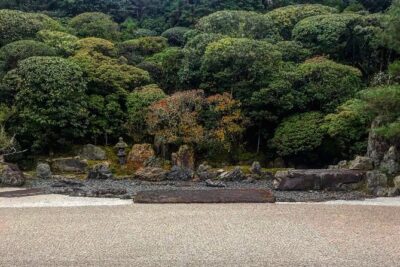
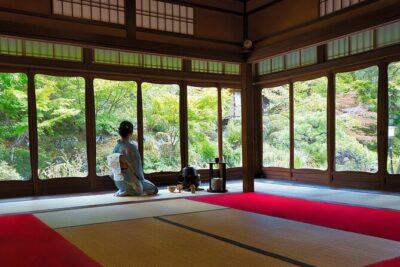
Kyoto Kiyomizu Tea Ceremony with Scenic Garden Views
Read our review →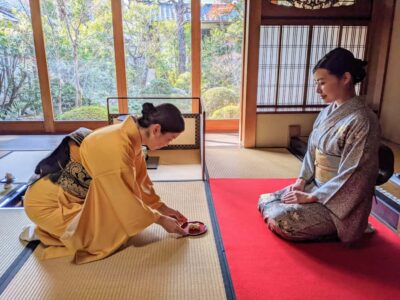
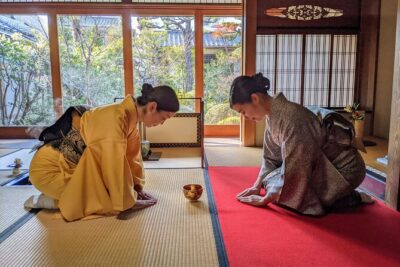
Stunning Private Tea Ceremony: Camellia Garden Teahouse
Read our review →Browse the lists this tour appears in