
Review · KYOTO
Kyoto Tea ceremony with Japanese Flower Arrangement Ikebana
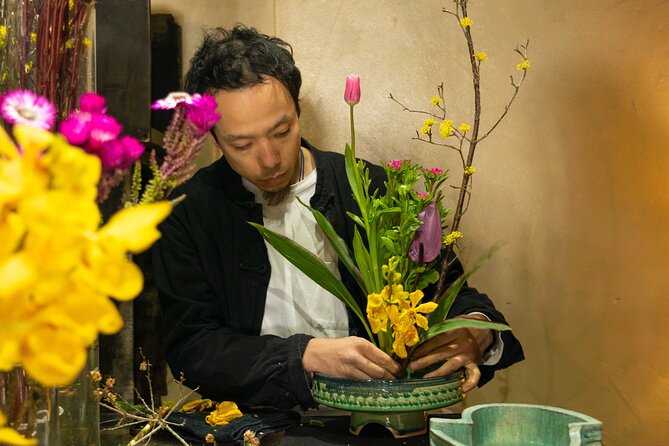
The best part of this Kyoto experience is the move from flower shop to tea room. You choose seasonal flowers, shape them into an arrangement, then place your work in the alcove of a traditional Japanese room before taking part in a tea ceremony. I like the small maximum of six people and the warm, family-style setting described by past participants. I also like that the arrangement can go back to your hotel.
The main consideration is location. You will need to reach Murasakino, near Kinkaku-ji and Daitoku-ji, rather than a central Kyoto meeting point. The experience lasts about 90 minutes, so it offers a focused cultural lesson, not a full-day craft course.
Key points to know before booking
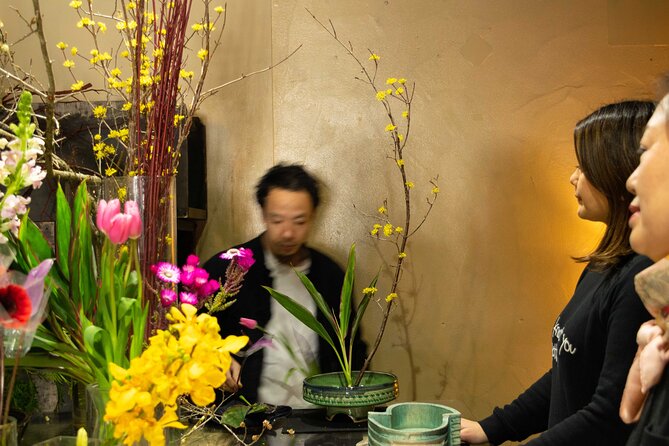
- Choose your own seasonal flowers: You begin in a flower shop, selecting blooms that appeal to you.
- A relaxed form of ikebana: The instructor respects classic ideas while allowing the natural shape of each plant to guide the design.
- Your work enters the tea room: Your arrangement is displayed in the tokonoma, the alcove used for art and ceremony.
- Tea ceremony with a hands-on element: You watch the master and may also try playing the role of tea master.
- A quiet, personal class: The setting is a renovated townhouse about 100 years old, with space for no more than six people.
- Good value for a short cultural activity: At $61 for roughly 90 minutes, the class combines flowers, instruction, a traditional room, and tea ceremony.
From a Kyoto flower shop to a traditional tea room
This experience begins at 44-4 Murasakino Kamimonzenchō in Kyoto’s Kita Ward. The class takes place in a flower shop housed in a renovated townhouse that is about a century old. That setting matters. You are not entering a polished stage set built only for tourists. You are starting with flowers in a working, family-like place before moving into a room designed for quiet ceremony.
The first task is choosing your flowers. Seasonal blooms are the raw material, and the selection gives you a direct way to connect with the time of year in Japan. You are not simply handed a finished arrangement to admire. You choose the colors and forms that will become part of your own work.
That makes the class more personal than a standard demonstration. You may be drawn to a flower because of its shape, color, or even the way its stem bends. The aim is not to force every stem into a rigid pattern. Instead, the instructor helps you see what the plant is already doing.
Other gardens people visit around Kyoto:
- Kyoto Zen Meditation & Garden Tour at a Zen Temple with Lunch
★ 5.0 · 441 reviews - Kyoto Arashiyama Bamboo forest & Garden Half-Day Walking Tour
★ 5.0 · 413 reviews - Authentic Kyoto Tea Ceremony: Camellia Flower Teahouse
★ 5.0 · 269 reviews
Learning ikebana without feeling tested
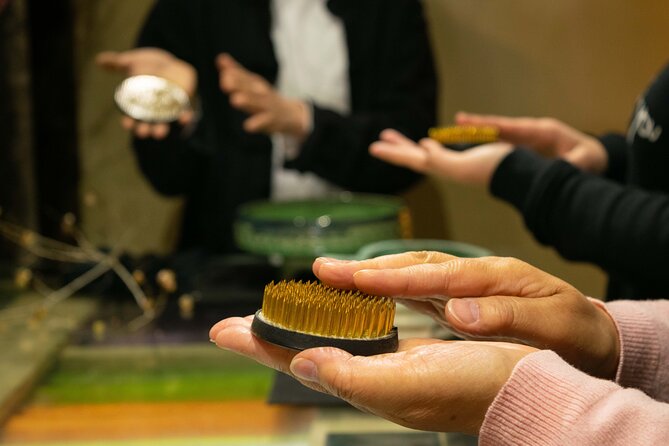
Ikebana is often described as Japanese flower arrangement, but that simple label misses part of the point. The practice asks you to pay attention to line, space, balance, and the natural character of each plant. Here, the approach moves slightly away from strict classic forms.
The owner focuses on bringing out the beauty of the flowers while respecting their natural form. The style is compared with a more primitive, wabi-sabi approach. In practical terms, that means your arrangement does not need to look perfectly symmetrical or heavily decorated. A crooked stem can remain crooked if it gives the design character.
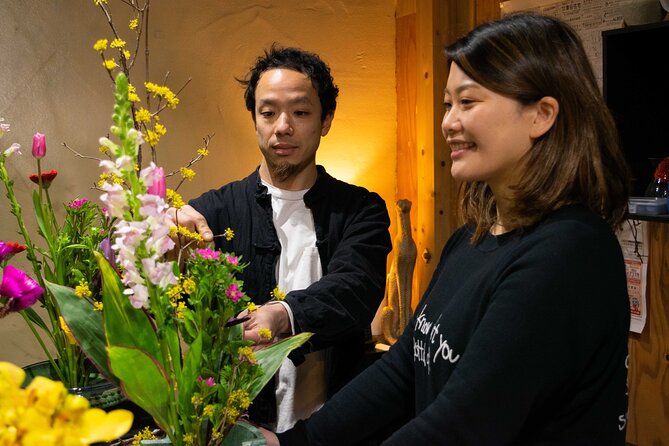
That is helpful if you are new to ikebana. You do not need previous art or flower-arranging experience. The instructors guide beginners through the process, helping you turn a handful of seasonal flowers into a deliberate composition.
I like the reflective side of this activity. The arrangement in front of you is presented as an expression shaped by your past and present. That may sound serious for a 90-minute class, but the idea gives the work purpose. You are not only learning where to place a flower. You are being asked to slow down and notice what you choose.
This is also why the class may appeal to you if you want a calmer break from temple visits and crowded streets. Ikebana can function as a form of meditation, with attention directed toward nature and your own decisions. It is quiet, hands-on, and personal.
Placing your arrangement in the tokonoma
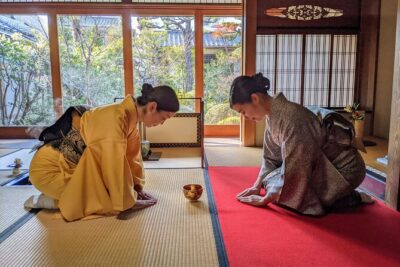
After you make your arrangement, you move into a traditional Japanese room for the tea ceremony. Your flowers are placed in the tokonoma, the recessed alcove traditionally used to display art, calligraphy, or flowers.
This is a small but meaningful part of the experience. Your arrangement is not treated as an exercise that disappears once the lesson ends. It becomes part of the room, where it helps shape the atmosphere for the tea ceremony.
The tokonoma also gives you a practical glimpse into how Japanese decorative arts work together. The flowers are not separate from the room. Their placement, shape, and seasonal character contribute to the feeling of the space.
If you prefer, you can take your arrangement back to your hotel. That makes the experience more than a temporary demonstration. You leave with something made during the class, and it can add a little color to your room for the rest of your stay.
The information provided does not specify how the flowers are packaged for transport, so you should ask the instructor about carrying your arrangement if you plan to take it with you. The option is offered, but the practical details are best confirmed on the day.
Tea ceremony in a room made for quiet attention
Once the ikebana work is displayed, the tea portion begins. You watch the master conduct a tea ceremony in the traditional room, then you may take a turn playing the role of tea master.
That second part is useful. Watching a ceremony can be beautiful, but the gestures and order of events can remain abstract when you sit only as an observer. Taking part gives you a clearer sense of the care behind each movement.
The experience does not present the tea ceremony as a theatrical show. It places your own flower arrangement in the room and connects the two arts. Ikebana brings nature into the space. Tea ceremony gives the room a set rhythm and purpose. Together, they offer a compact introduction to two traditional Japanese practices.
The class is especially suited to you if you prefer learning by doing. You can ask questions, handle the flowers, arrange your work, watch the tea preparation, and try the tea master’s role. At the same time, the 90-minute duration keeps the activity manageable during a busy Kyoto day.
Do not book it expecting an extended tea school or an advanced ikebana course. The format is a short cultural experience for beginners. Its strength is the combination of several elements in one small setting.
Same place, a different kind of green day out:
- Kyoto: Zen Garden, Zen Mind (Private)
★ 5.0 · 126 reviews - Kyoto Kiyomizu Tea Ceremony with Scenic Garden Views
★ 5.0 · 101 reviews - Kyoto: Private Tea Ceremony with a Garden View
★ 4.9 · 61 reviews - Bamboo Grove Temple and Garden Views Tour
★ 5.0 · 41 reviews
What the small group changes
The maximum group size is six people. That is one of the strongest practical features of the experience.
A small class gives the instructors more room to guide each arrangement. It should also make the tea room feel less crowded and allow you to see the ceremony without a large audience between you and the action.
The intimate format suits solo visitors particularly well. One past participant described the class as warm and family-like, and that is a useful way to think about the setting. You are not joining a large bus group moving through a scripted cultural stop. You are entering a small workshop where personal attention is part of the appeal.
The trade-off is that a small class may have limited availability. Confirmation is sent within 48 hours of booking and depends on space. If your Kyoto schedule is tight, do not leave this reservation until the last minute.
The instructors are described as women who were patient and informative during both the tea ceremony and ikebana lesson. Specific names are not provided, but the teaching style appears well suited to first-time participants. You should expect guidance rather than pressure to produce a perfect arrangement.
Getting to Murasakino near Kyoto’s northern temples
The meeting point is in Murasakino, in Kita Ward, at 44-4 Murasakino Kamimonzenchō. The location is near Kinkaku-ji Temple and Daitoku-ji Temple, two major reasons to spend time in northern Kyoto.
This makes the class easy to pair with a temple visit, at least in broad planning terms. You can build it into a day exploring the northern part of the city instead of crossing back and forth between distant neighborhoods. The exact walking and transit time from your other stops is not provided, so check your route before booking a fixed time.
The setting is near public transportation. You will still want to allow enough time to find the townhouse and flower shop, especially if you are not familiar with Kyoto’s smaller streets. The experience ends back at the meeting point, so you do not need to arrange a separate pickup.
A mobile ticket is provided, which is convenient when you are moving around Kyoto with a phone rather than carrying printed paperwork. Service animals are allowed, and most people can participate. The supplied information does not give detailed accessibility specifications, so contact the operator if you need information about steps, seating, or movement within the traditional room.
Is $61 a fair price for 90 minutes?
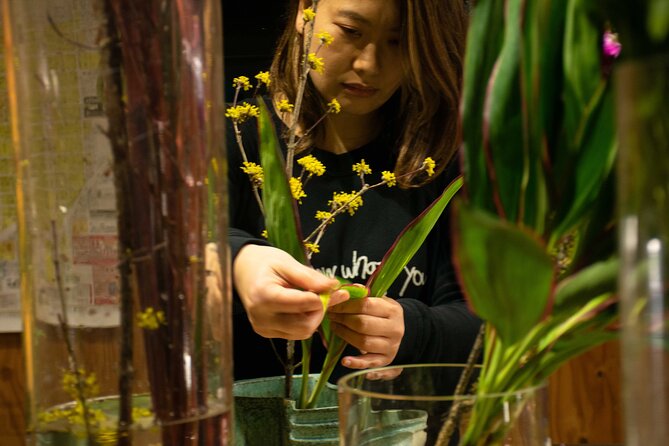
At $61, this is not the cheapest short activity in Kyoto. The value comes from what is included in the format: flower selection, guided ikebana instruction, use of a traditional room, display in the tokonoma, tea ceremony, and the chance to try the tea master’s role.
You are also paying for a very small class. If the group reaches six people, the per-person price supports a more personal lesson than a large demonstration. The arrangement you make may also be taken to your hotel, giving you a physical reminder of the experience.
The price makes less sense if you only want to watch a tea ceremony. Kyoto offers many tea-focused activities, and this one devotes a substantial part of its time to flower arrangement. Book it because you want both arts, not because you are searching for the longest or most formal tea ritual.
For me, the strongest value is the connection between the two parts. You choose flowers, make a design, place it in the tea room, and then see how that setting changes the feeling of your work. That sequence gives the class more depth than a tea tasting alone.
Who will enjoy this Kyoto cultural class?
I would recommend this experience if you want a gentle, creative activity that does not require previous knowledge. It is a good fit for solo visitors, couples, and anyone who prefers a small class over a large group demonstration.
It may also suit you if you have already seen several temples and need a different way to encounter Japanese culture. Instead of looking at another building, you work with flowers and learn how two traditional arts are practiced.
The class is a particularly good choice for people interested in:
- Seasonal flowers and Japanese design
- Quiet, reflective activities
- Small-group instruction
- Taking home a handmade keepsake
- Tea ceremony with some participation
- A cultural stop near Kinkaku-ji and Daitoku-ji
It may not suit you if you dislike hands-on crafts, have very little time in northern Kyoto, or want a long, formal tea ceremony with extensive historical instruction. The class is short and accessible, but it is not an advanced study session.
What to know before you reserve
The experience is rated five out of five from three submitted ratings, with repeated praise for its peaceful mood, patient instruction, and personal feel. That is a small sample, so I would not treat the rating as proof that every session will be identical. Still, the same strengths appear across the available comments, which makes them useful when deciding.
Book at least 24 hours before the start time if you want to keep your refund option. You can cancel up to that point for a full refund. Cancellations or changes made within 24 hours are not refunded or accepted, and the cut-off uses local Kyoto time.
Confirmation arrives within 48 hours and remains subject to availability. Since the class is limited to six people, keep an eye on your booking confirmation before you build the rest of your day around it.
Should you book the ikebana and tea ceremony?
Book this class if you want a quiet, personal introduction to two Japanese arts, especially if you like making something with your own hands. The flower selection and the chance to display your arrangement in the tokonoma give the experience a clear sense of place.
I would skip it if you want only a tea ceremony, a large historical lecture, or a full-day craft course. For everyone else, $61 is a reasonable price for a small 90-minute class near Kyoto’s northern temples, particularly because you may take your flower arrangement back to your hotel. It is a focused experience, but the focus is the point.
FAQ
Where does the experience begin?
It begins at 44-4 Murasakino Kamimonzenchō, Kita Ward, Kyoto, 603-8217, Japan.
Where does the experience end?
It ends back at the meeting point.
How long does the activity last?
The experience lasts approximately 1 hour and 30 minutes.
How much does it cost?
The listed price is $61.
What will I do during the ikebana workshop?
You will choose seasonal flowers and create your own flower arrangement with guidance from the instructors.
Can beginners take part?
Yes. Beginners are welcome.
What happens to my ikebana arrangement?
Your arrangement is displayed in the tokonoma of the traditional Japanese room during the tea ceremony. You may also take it to your hotel if you wish.
Will I take part in the tea ceremony?
You will watch the master conduct a tea ceremony, and you may also play the role of tea master.
How many people can join the activity?
The activity has a maximum of six participants.
Can I cancel for a full refund?
Yes, if you cancel at least 24 hours before the experience start time. Cancellations within 24 hours are not refunded, and changes within that period are not accepted.
Just added around Kyoto
- Kyoto-Nara Adventures Private Tour With Hotel Pick Up★ 4.0 · 5 reviews
- Ikebana Traditional Japanese Art of Flower Arranging★ 4.5 · 19 reviews
- Traditional Japanese Flower Styling Workshop – Ikebana in Kyoto★ 5.0 · 10 reviews
- Stunning Private Tea Ceremony: Camellia Garden Teahouse★ 5.0 · 28 reviews
- Zen Garden Making and Matcha Tasting in Handmade Pottery Shop★ 3.5 · 2 reviews
- Kyoto Hidden Treasures: Special Temple & Garden Access Tour★ 4.5 · 25 reviews
- Guided Kyoto City Cherry Blossom One Day Private Tour★ 5.0 · 16 reviews
- Kyoto: Kinkaku-ji Temple & Serene Garden Guided Tour with Tickets★ 5.0 · 9 reviews
Kyoto Garden Tours, compared.
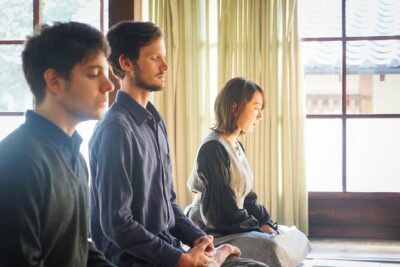
Kyoto Zen Meditation & Garden Tour at a Zen Temple with Lunch
Read our review →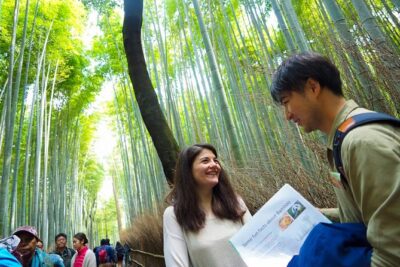
Kyoto Arashiyama Bamboo forest & Garden Half-Day Walking Tour
Read our review →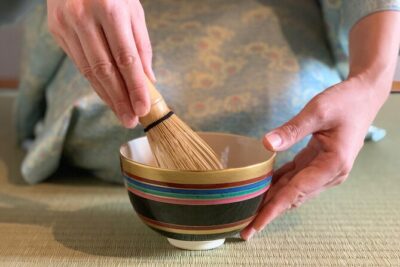
Authentic Kyoto Tea Ceremony: Camellia Flower Teahouse
Read our review →
Kyoto Kiyomizu Tea Ceremony with Scenic Garden Views
Read our review →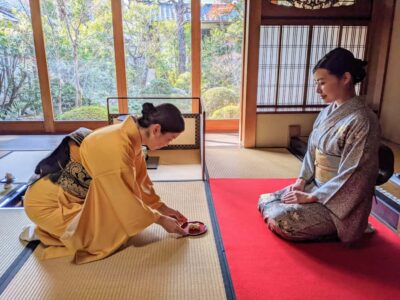
Stunning Private Tea Ceremony: Camellia Garden Teahouse
Read our review →Browse the lists this tour appears in