
Review · JAPANESE & ZEN
Kyoto Golden Temple & Zen Garden: 2.5-Hour Guided Tour
Kyoto’s famous Golden Pavilion is only half the story here. This 2.5-hour walking tour pairs Kinkaku-ji with the quieter Ryoanji Rock Garden, giving you two very different views of Zen culture in one northern Kyoto outing.
I like the small group size, with no more than nine companions, and I like that entrance fees, water, and an English-speaking guide are included. The main consideration is the fixed route: you begin at Ryoanji and finish at Kinkaku-ji, so you must arrange your own transport to the first temple and plan what comes next from the Kinkakuji-michi area.
Key points at a glance
- Study Ryoanji’s 15-rock garden: See one of Japan’s best-known dry gardens and hear how it fits into Zen practice and Japanese culture.
- See the Golden Pavilion after Ryoanji: The route moves from quiet stones and moss to gold leaf, water, and formal temple gardens.
- Keep the group personal: The tour accepts up to nine companions, a useful middle ground between a private guide and a large coach group.
- Budget with fewer surprises: The $80 price includes both entrance fees, the guide, water, and the walking tour.
- Start and finish in different places: Meet at Ryoanji-mae and finish at Kinkakuji-michi, with help from the guide for your next destination.
- Allow two and a half hours: Ryoanji receives about an hour, while Kinkaku-ji receives about 90 minutes.
Why Pair Ryoanji and Kinkaku-ji?
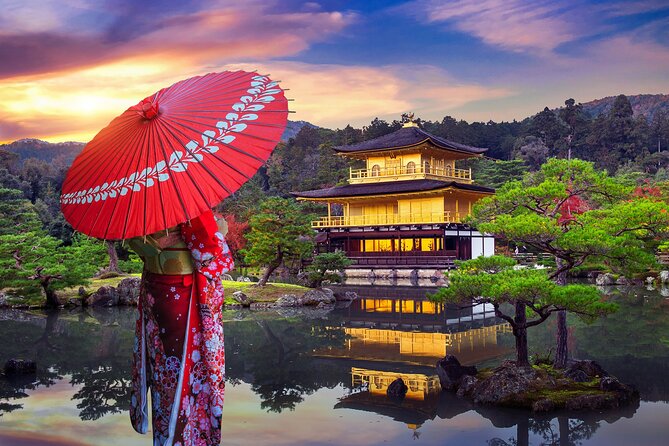
These two temples offer sharply different experiences. Ryoanji asks you to sit with a simple arrangement of stones, gravel, and moss. Kinkaku-ji gives you a bright, instantly recognizable temple set beside water and gardens.
That contrast makes the tour more useful than a quick visit to the Golden Pavilion alone. You see both restraint and display, two sides of Kyoto’s religious and artistic character, while your guide supplies the context that can be easy to miss when you are moving from one famous sight to the next.
The order also makes sense. You start at Ryoanji, where the mood is quiet and measured, then spend more time at Kinkaku-ji. By the end, you are already near the Kinkakuji-michi bus stop area, a practical place from which to continue your day.
I would choose this outing when you want a focused introduction to northern Kyoto rather than a full-day city tour. It covers only two sites, but those sites are major ones, and the time is long enough to look around without turning the visit into a rushed photo stop.
More Japanese Garden Tours in Kyoto
- Kyoto: Zen Garden, Zen Mind (Private)
★ 5.0 · 126 reviews - Kyoto: Japanese Gardens Private Customizable Tour
★ 4.1 · 18 reviews - Kyoto Guided Walking Tour: Secret Zen Garden and Fushimi Inari
★ 5.0 · 17 reviews
Ryoanji’s Fifteen Stones and the Art of Restraint
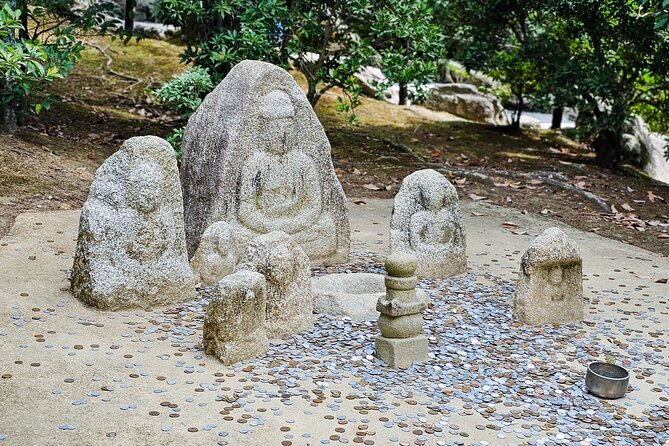
At Ryoanji, the central attraction is the world-famous dry garden, known in Japanese as a karesansui garden. Its rectangular bed of pebbles contains 15 rocks arranged in small groups, each set on patches of moss.
The design is deliberately spare. There are no colorful flower displays competing for attention, and no pond at the center of the composition. Instead, the gravel, rocks, and moss create a scene that rewards patience.
Your guide explains the garden’s background and its place in Japanese culture. That matters here because the arrangement can seem almost too simple at first. A few useful words about Zen ideas and dry-garden design can change the way you look at the stones.
You should expect roughly one hour at Ryoanji. That is enough time to see the garden, listen to the explanation, and take in the wider temple grounds at a steady pace. If you prefer to linger in silence, the hour may feel short, so listen closely and save some time after the guide’s main explanation for your own look.
The calm atmosphere is one of the strongest reasons to begin here. The tour description emphasizes nature and quiet, and this stop provides the most reflective part of the morning or afternoon. I would not treat it as a place to rush through simply because the garden itself is compact.
There is also a useful lesson in expectations. Ryoanji is not a spectacle in the same way as Kinkaku-ji. Its appeal depends on composition, space, and interpretation. If you want bright colors and a dramatic first photograph, you may find the garden understated. If you like places that ask you to slow down, this is likely the stronger stop.
Walking Toward the Golden Pavilion
The experience connects Ryoanji and Kinkaku-ji on foot. The tour is described as a walking tour, and the two stops are in the same broad northern Kyoto area, but the supplied details do not give a precise walking distance or route length.
That means you should wear comfortable shoes and allow room in your day for the movement between sites. The tour lasts about two and a half hours overall, with one hour at Ryoanji and one hour and 30 minutes at Kinkaku-ji. The remaining time includes the transition and guiding between the two places.
This format works well if you want someone else to manage the sequence. You do not need to decide which temple comes first or how much time to assign to each one. The guide keeps the visit moving while leaving space for questions.
The route is not designed as hotel transport. There is no hotel pickup or drop-off, so you make your own way to Ryoanji-mae at the start. The meeting point is listed at Ryoanji Temple, Ryoanji Goryonoshitacho, Ukyo Ward, Kyoto.
The tour is near public transportation, which helps with arrival and departure. Still, check your route before leaving, especially if you are trying to fit this outing between other Kyoto appointments. Since the tour ends somewhere different from where it starts, do not assume you can simply retrace your steps to collect belongings or return to your hotel.
Kinkaku-ji, Kyoto’s Gold Beside the Pond
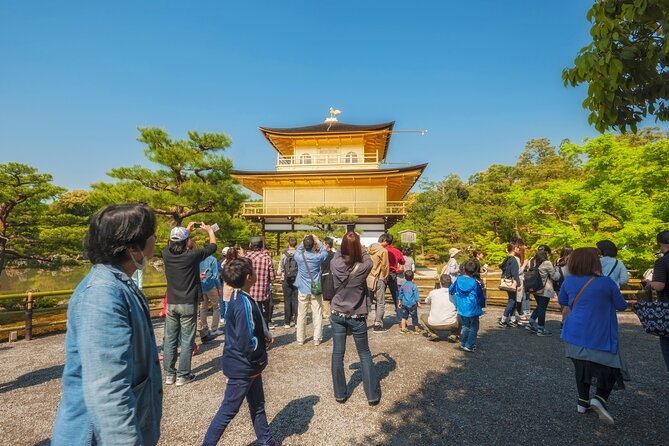
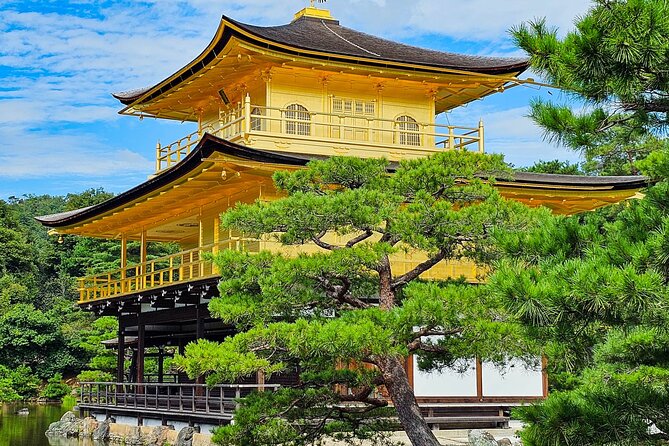
Kinkaku-ji is the visual showstopper. Also called the Golden Pavilion, this Zen Buddhist temple has gold leaf on its upper two floors, which reflects in the pond beside it.
The setting gives you several things to look at at once: the pavilion, the water, and the surrounding gardens. Your guide discusses the site’s imperial background while you walk around the grounds, helping connect the building’s appearance with its earlier role and later religious importance.
The visit lasts about 90 minutes, longer than the time at Ryoanji. That is sensible. Kinkaku-ji is not just a single building viewed from one angle. You have time to see the pavilion from the pond, walk through the gardens, and hear the explanation without treating the stop as a quick snapshot.
The gold leaf is naturally the main attraction, but the pond is what makes the view so effective. The reflection adds a second image and changes as you move. I would take a moment to look beyond the first familiar view, since the gardens provide the setting that gives the pavilion its force.
Kinkaku-ji can feel more visually busy than Ryoanji. The Golden Pavilion is famous, and its fame is part of the experience, but it also means this stop may feel less private and contemplative. The small-group format helps your guide keep the visit organized, but it cannot turn a major Kyoto sight into a secluded one.
That difference is not a flaw in the tour. It is the point of the pairing. Ryoanji gives you quiet concentration, while Kinkaku-ji gives you a strong sense of place and visual drama. I like that the tour does not pretend the two temples offer the same kind of visit.
Same place, a different kind of green day out:
- Kyoto Zen Meditation & Garden Tour at a Zen Temple with Lunch
★ 5.0 · 441 reviews - Kyoto Arashiyama Bamboo forest & Garden Half-Day Walking Tour
★ 5.0 · 413 reviews - Authentic Kyoto Tea Ceremony: Camellia Flower Teahouse
★ 5.0 · 269 reviews - Kyoto Kiyomizu Tea Ceremony with Scenic Garden Views
★ 5.0 · 101 reviews
What the Guide Adds to Two Famous Temples
At both sites, the guide’s role is to explain what you are seeing rather than simply lead you from gate to gate. You receive an English-language account of Ryoanji’s garden, its place in Japanese culture, and Kinkaku-ji’s imperial background.
That personal explanation is especially useful at Ryoanji. Without context, the 15 rocks may look like an attractive but puzzling arrangement. A guide can point you toward the ideas and design choices that make the garden worth more than a quick photograph.
At Kinkaku-ji, the guide gives the pavilion a longer story than its gold exterior alone can provide. You can ask questions as you walk, and the group limit of up to nine companions should make conversation more practical than it would be in a large tour.
One guide named in the available information is Boris. A detailed account of the experience describes him as explaining Japanese history at a good pace, which is useful guidance for anyone concerned about a lecture-heavy tour. The experience can be led by different staff, so Boris should not be treated as guaranteed for every departure.
The best guides know when to talk and when to let the site speak. At Ryoanji, that balance matters. At Kinkaku-ji, a clear explanation helps you understand the temple without keeping you away from the view.
Is $80 a Fair Price in Kyoto?

The price is $80 per person. That is not the cheapest way to see two Kyoto temples, since you could arrange independent visits and pay your own admission. The question is what the extra cost buys you.
Here, the fee includes both entrance tickets, a two-and-a-half-hour guided walk, an English-speaking guide, and drinking water. You are paying for structure and explanation as much as for admission.
I see the value most clearly if this is your first visit to Kyoto, if you want historical context, or if you do not want to work out the route between the two temples yourself. The small group also gives you a more personal format without the higher cost of a fully private tour.
The value is weaker if you already know both sites well, prefer to move at your own speed, or want to spend a long time sitting quietly at Ryoanji. The schedule gives each stop a set amount of time, and the guide determines the flow.
Group discounts are available, which may improve the price for people booking together. Meals, extra drinks, hotel transport, and personal expenses are not included, so budget for those separately.
I would compare the $80 cost with the value of your time. If a guide helps you avoid confusion and makes the temples more meaningful, the fee is reasonable. If you are comfortable navigating Kyoto and reading about the sites beforehand, an independent visit may cost less.
Timing, Meeting Point, and the End of the Walk
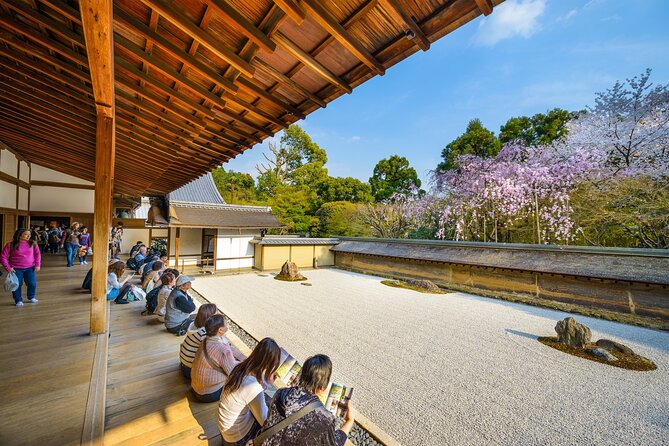
The tour starts at Ryoanji-mae, at Ryoanji Temple in Kyoto’s Ukyo Ward. You are responsible for getting there, and the start time is selected when you book.
The experience ends at Kinkakuji-michi, near Kinkaku-ji in Kita Ward. This one-way setup is convenient if you plan to continue exploring from the Golden Pavilion, but less convenient if your plans require you to return to the starting area immediately.
The guide will help with your next destination at the end. That is a small but useful touch, especially because the tour does not include hotel drop-off. Keep your onward plan flexible enough to allow for the end of the walking tour and your next ride.
Confirmation is provided when you book, and mobile tickets make the arrangement simple to carry on your phone. Last-minute booking is possible according to the supplied details, though this experience is typically reserved about six days ahead. If the date matters, I would not wait until the final day.
Free cancellation is available if you cancel at least 24 hours before the local start time. Cancellations or changes made within 24 hours are not accepted for a refund, so check the timing carefully before making a late adjustment.
Who Will Get the Most from This Tour?
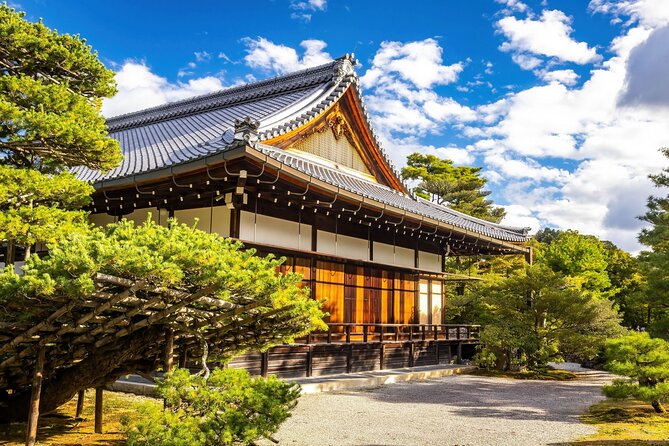
I would recommend this tour to first-time Kyoto visitors who want two major cultural sights explained in plain English. It also suits people who enjoy a set schedule and want a guide to connect architecture, gardens, Zen practice, and imperial history.
It is a good fit for couples, families, and small groups who prefer not to join a large bus outing. Most people can participate, and the group size is capped at nine companions.
You should think twice if you want a private, unhurried meditation-style visit. This is still a group tour, and the two-and-a-half-hour schedule gives you a clear limit at each temple.
It may also be less suitable if your Kyoto day is built around hotel pickup. There is no pickup or drop-off, and you must manage both ends of the journey yourself. The one-way route is helpful for some plans and awkward for others.
Should You Book the Ryoanji and Kinkaku-ji Walk?
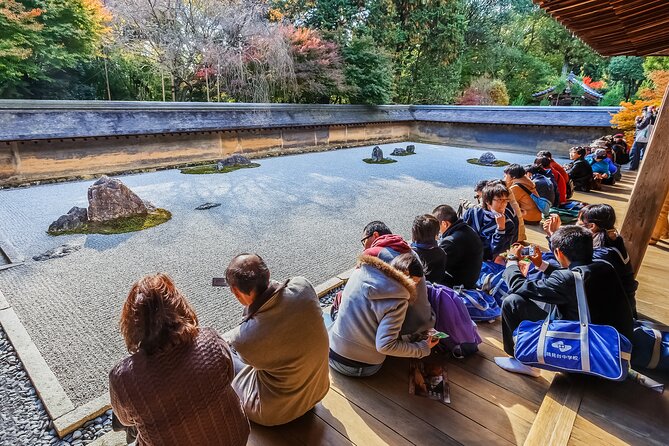
Book it if you want an efficient introduction to two of northern Kyoto’s best-known temples, with entry fees and a guide included. The strongest feature is the contrast between Ryoanji’s 15-rock garden and Kinkaku-ji’s gold pavilion, pond, and gardens.
The $80 price makes the most sense when you value explanation, a small group, and a ready-made route. I especially like the hour at Ryoanji and the longer 90-minute visit at Kinkaku-ji, since each site receives enough attention to feel like more than a hurried stop.
Skip it if you prefer complete freedom, already understand the temples, or need transportation from your hotel. For everyone else, this is a focused Kyoto outing with a sensible route, a personal group size, and a good balance of quiet garden time and famous scenery.
FAQ
How long does the Kyoto Golden Temple and Zen Garden tour last?
The tour lasts approximately 2 hours and 30 minutes. It includes about one hour at Ryoanji and 1 hour and 30 minutes at Kinkaku-ji.
Where does the tour begin?
The meeting point is Ryoanji-mae at Ryoanji Temple, Ryoanji Goryonoshitacho, Ukyo Ward, Kyoto, 616-8001, Japan.
Where does the tour end?
The tour ends at Kinkakuji-michi near Kinkaku-ji, Kinugasa Kaidocho, Kita Ward, Kyoto, 603-8372, Japan. The guide can help you with your next destination.
Are entrance fees included?
Yes. Admission to both Ryoanji and Kinkaku-ji is included, along with an English-speaking guide, drinking water, and the 2.5-hour walking tour.
How large is the group?
The activity has a maximum of nine companions. It is not a private tour, but the group is limited in size.
What is the cancellation policy?
You can cancel at least 24 hours before the local start time for a full refund. Cancellations or changes made less than 24 hours before the start are not accepted for a refund.
Just added around Kyoto
- Kyoto-Nara Adventures Private Tour With Hotel Pick Up★ 4.0 · 5 reviews
- Ikebana Traditional Japanese Art of Flower Arranging★ 4.5 · 19 reviews
- Traditional Japanese Flower Styling Workshop – Ikebana in Kyoto★ 5.0 · 10 reviews
- Stunning Private Tea Ceremony: Camellia Garden Teahouse★ 5.0 · 28 reviews
- Kyoto Hidden Treasures: Special Temple & Garden Access Tour★ 4.5 · 25 reviews
- Zen Garden Making and Matcha Tasting in Handmade Pottery Shop★ 3.5 · 2 reviews
- Guided Kyoto City Cherry Blossom One Day Private Tour★ 5.0 · 16 reviews
- Kyoto: Kinkaku-ji Temple & Serene Garden Guided Tour with Tickets★ 5.0 · 9 reviews
Japanese & Zen Garden Tours, compared.
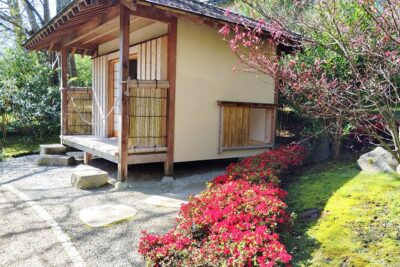
Lafcadio Hearn Japanese Gardens Admission Adult Ticket
Read our review →
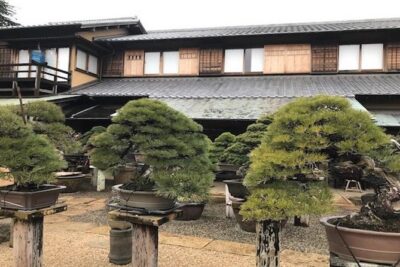
Make Your Own Bonsai with a Professional Bonsai Artist in Tokyo
Read our review →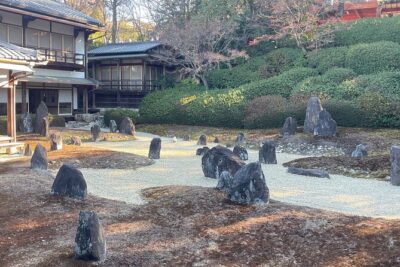
Kyoto Guided Walking Tour: Secret Zen Garden and Fushimi Inari
Read our review →
Experience Crafting a Flower-Adorned Mini Japanese Garden
Read our review →
Bonsai Tour & Experience at the Most Sacred City for Bonsai in JP
Read our review →Browse the lists this tour appears in