
Review · JAPANESE & ZEN
Kyoto Guided Walking Tour: Secret Zen Garden and Fushimi Inari
The best part of this Kyoto walk is the way it moves from a quiet Zen garden to the famous red torii gates of Fushimi Inari. You get the big sight, but you reach it by a quieter route through Tofukuji’s temple grounds and small shrines.
I like the small group of no more than eight and the guides’ flexible pace. I also like the mix of famous and lesser-known places, especially Komyo-in Temple and the less-used paths around Fushimi Inari. The main drawback is the uphill walking, so comfortable shoes are not optional.
I’d book this tour if you want cultural context without spending hours planning your own route. Guides including Mika, Kenta, and Naomi are praised for clear English, useful explanations, and adjusting the pace to the group. Just allow four hours and expect a real hike, not a flat city stroll.
Key points at a glance
- A quiet start at Tofukuji: Begin among temple buildings, maple trees, bridges, and sub-temples before reaching the crowds at Fushimi Inari.
- Komyo-in’s Zen garden: Spend about 25 minutes at a peaceful sub-temple that many independent visitors skip.
- A scenic uphill route: Reach Yotsuji for a broad Kyoto view, with several smaller shrines along the way.
- Small-group attention: The group is limited to eight, making it easier to ask questions and adjust walking speed.
- Strong guide support: Mika, Kenta, and Naomi are noted for clear explanations, local knowledge, and thoughtful pacing.
- A four-hour cultural walk: The tour ends at Fushimi Inari’s Outer Oratory, rather than returning you to the starting point.
Why this route works so well in Kyoto
Kyoto can be hard to read on your own. A famous temple may sit beside a tiny sub-temple that receives almost no attention, while a major shrine can become crowded within minutes. This tour links those contrasts in a sensible half-day route.
You start near Tofukuji and finish at Fushimi Inari. That matters because both are in Kyoto’s southeast, so you spend your time walking through the area rather than crossing town between disconnected sights.
The route also has a useful rhythm. Tofukuji provides temple architecture and mountain scenery. Komyo-in slows things down with a Zen garden. The shrines add a more personal religious feel. Then the torii gates provide the visual finale most people come to Kyoto hoping to see.
At $78.83 per person, this is not the cheapest way to see Fushimi Inari. You can visit the shrine without paying admission, and public transportation in Kyoto is reasonably simple. The value comes from the route, the explanations, and the effort saved in finding the quieter corners.
A private guide would cost far more. A large group tour might be cheaper, but it usually gives you less room to ask questions or change the pace. With a maximum of eight people, this sits in a useful middle ground.
More Japanese Garden Tours in Kyoto
- Kyoto: Zen Garden, Zen Mind (Private)
★ 5.0 · 126 reviews - Kyoto: Japanese Gardens Private Customizable Tour
★ 4.1 · 18 reviews - Kyoto Japanese Garden Lover’s Private Tour with Government-Licensed Guide
★ 4.5 · 10 reviews
Meeting at Tofukuji and crossing Gaun-kyo Bridge
The tour begins at 9:00 am outside the FamilyMart near Tofukuji, at 12-chōme-232 Honmachi in Kyoto’s Higashiyama Ward. Plan to arrive early. The meeting point is near public transportation, but a convenience store in a built-up area is not the kind of place where you want to search at the last second.
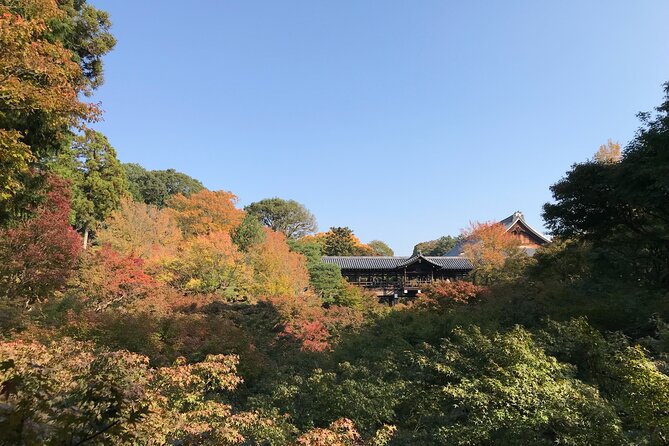
One early stop is Gaun-kyo Bridge. This wooden bridge crosses a leafy valley and looks toward the Tsutenkyo Bridge and the maple trees below. The stop lasts only about five minutes, but it gives you an immediate sense of why Tofukuji is especially attractive when the foliage changes color.
Even outside the autumn season, the bridge provides a pleasant opening view. You are not simply walking from one ticketed site to another. The route uses the temple area itself as part of the experience.
The short stop also hints at the tour’s structure. Some places receive a quick look, while the guide spends more time at locations where explanation and quiet observation matter.
Tofukuji introduces Kyoto’s Zen tradition
Tofukuji is one of Kyoto’s important Zen temples, founded in the 13th century. The tour uses the temple and its surrounding sub-temples as an introduction to Zen practice, temple design, and the relationship between buildings and nature.
You can expect the guide to explain the setting rather than simply point out structures. One of the most useful features of the tour is the effort to make Zen ideas understandable. Guides have used notes and illustrations to explain the temple’s past and religious role, which can help if Buddhist architecture is unfamiliar to you.
This is also where the route begins to feel less hurried. You are walking through a major temple complex, but the focus is not only on collecting photographs. The guide creates space for questions about history, religion, and meditation.
That said, the tour does not appear to include a formal meditation session. Think of it as an introduction to Zen thought and temple culture, not a retreat or hands-on spiritual workshop.
Komyo-in Temple and the secret garden pause
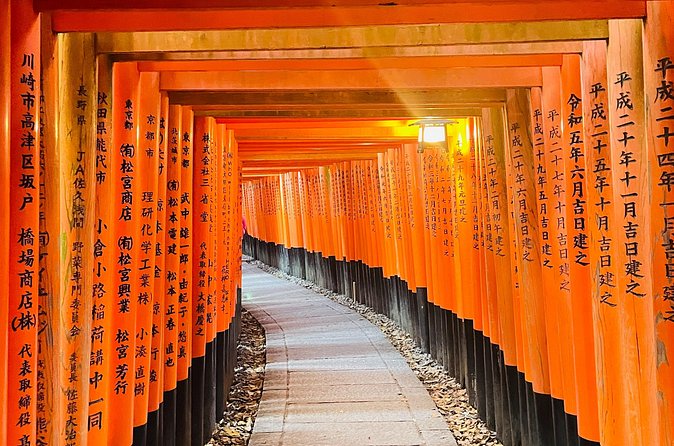
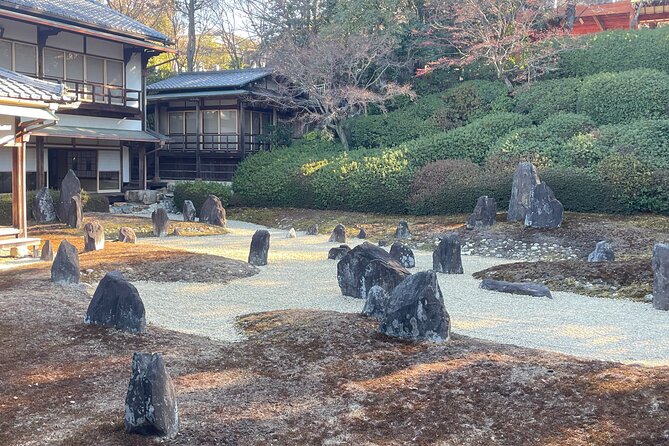
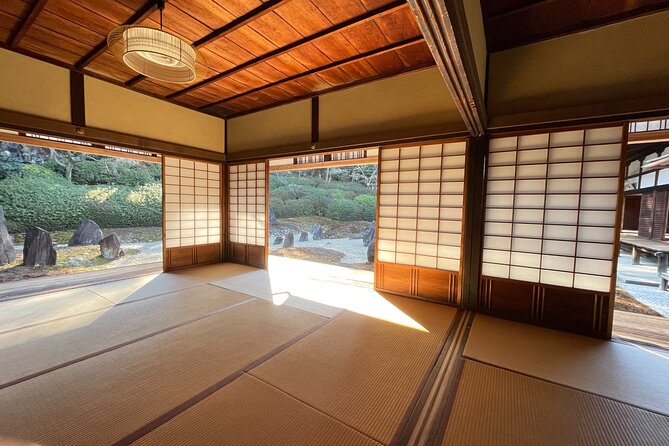
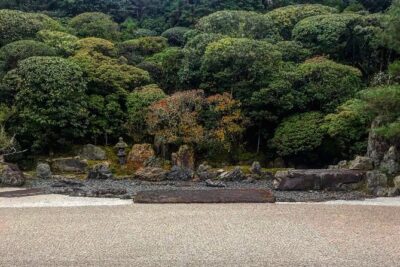
Komyo-in Temple is the quiet center of the morning. This small sub-temple is known for its Zen garden and peaceful setting, and the visit lasts about 25 minutes.
I like this stop because it gives the route a needed pause before the uphill section. Fushimi Inari is visually dramatic, but the torii gates can draw your attention so strongly that you miss the quieter side of Kyoto. Komyo-in offers time to sit, look closely, and consider how a garden can be arranged to suggest space and calm.
The garden is also the tour’s best answer to the usual Kyoto problem: famous places can feel crowded and rushed. This sub-temple is less familiar to many people, so it can feel more personal than the city’s headline sights.
Your guide may explain how the garden relates to Zen ideas, though the exact depth will depend on the guide and the questions you ask. Guides named Mika, Kenta, and Naomi have been praised for making cultural subjects easy to follow and for answering questions clearly.
The limitation is time. Twenty-five minutes is enough for an introduction, but not for a long, contemplative visit. If you want to sit in silence for an hour or study every garden detail, a self-guided visit would give you more freedom.
Same place, a different kind of green day out:
- Kyoto Zen Meditation & Garden Tour at a Zen Temple with Lunch
★ 5.0 · 441 reviews - Kyoto Arashiyama Bamboo forest & Garden Half-Day Walking Tour
★ 5.0 · 413 reviews - Authentic Kyoto Tea Ceremony: Camellia Flower Teahouse
★ 5.0 · 269 reviews - Kyoto Kiyomizu Tea Ceremony with Scenic Garden Views
★ 5.0 · 101 reviews
Araki Shrine adds a personal side to the walk
The next stop is Araki Shrine, where people pray for love, strong relationships, and general well-being. The visit lasts about ten minutes and admission is free.
This is a small but meaningful change of tone. At Tofukuji and Komyo-in, the emphasis is on Zen temples and gardens. Araki Shrine shows a more direct, everyday side of Japanese religious practice. People come with personal hopes, not just an interest in architecture.
You do not need to share those hopes to appreciate the stop. It is a chance to see how shrines fit into ordinary life and how different religious sites can serve different purposes.
Because the visit is brief, do not expect a long ceremony or an extensive shrine complex. Its value is in the contrast and in the guide’s explanation of what people come here to seek.
The uphill route to Yotsuji viewpoint
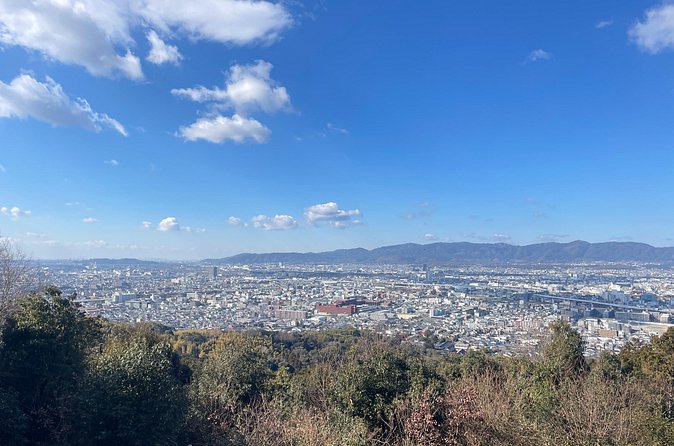
From this point, the walking becomes more demanding. The tour follows paths toward Fushimi Inari Yotsuji, a four-way crossroads and viewpoint on the shrine’s mountain route.
You will walk uphill, and the route includes hiking. The tour information calls for moderate physical fitness, and that advice should be taken seriously. The guides are willing to walk at the group’s pace, but no guide can remove the slope from the trail.
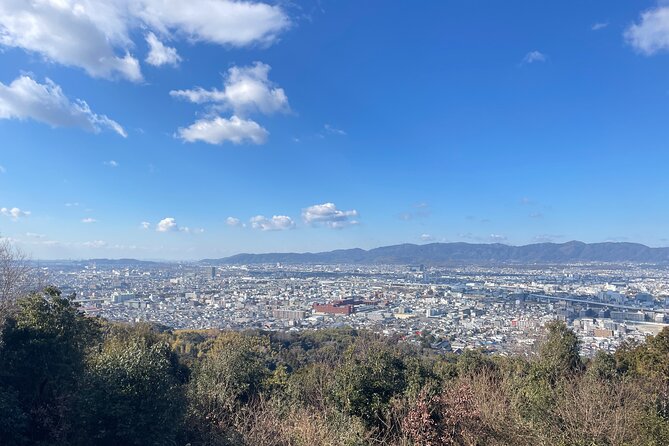
Yotsuji is worth the effort because it opens up a view across Kyoto. After the enclosed feel of temple grounds and torii tunnels, the wider outlook gives you a better sense of the city’s size and setting.
The stop lasts about 20 minutes. That is enough time to catch your breath, take photographs, and listen to the guide. It is also a useful point for deciding how much energy you want to spend farther up the mountain.
One practical point: wear walking shoes with good support. Sandals, stiff dress shoes, or shoes with poor grip will make this route less enjoyable. Bring water, especially in warm weather, though the supplied information does not specify whether water is provided.
Kumataka Shrine and the quieter side of Fushimi Inari
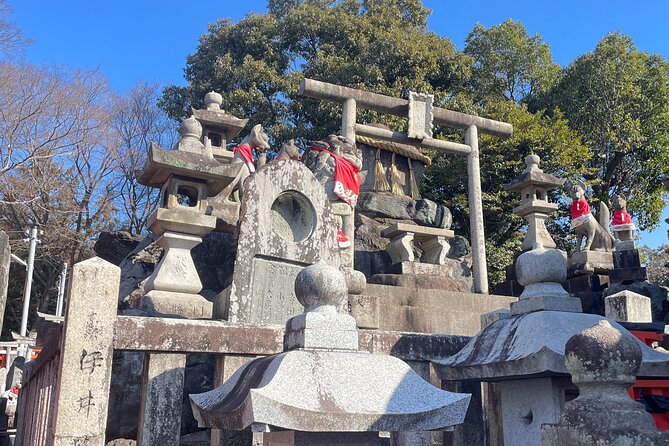
Kumataka Shrine is one of the route’s more secluded stops. It is associated with strong spiritual energy and offers a quieter setting away from the busiest torii paths.
This is exactly the kind of place that is easy to miss without someone who knows the area. The shrine visit lasts about 15 minutes, so the stop is not long, but it breaks up the ascent and gives you another look at the religious character of Fushimi Inari.
I would not book this tour expecting every stop to be a grand monument. Kumataka is valuable because it is smaller and more atmospheric. The quiet can help you notice details that disappear when you move only along the main route.
The guide’s role is especially useful here. A place with little signage can be hard to understand on your own. Clear historical and religious context helps turn a short stop into something more than a photo break.
Okusha Worship Center and the meaning of shrine items
The route continues to the Okusha Worship Center, also called Nosatsusho in the supplied information. Here, you can learn about sacred ofuda amulets, omamori charms, and goshuin shrine stamps.
This stop gives you a practical look at Japanese shrine customs. Ofuda and omamori are not simply souvenirs. They have religious meaning, and a guide can explain the difference between the items and how people use them.
The visit lasts about ten minutes and admission is free. You may have the option to obtain a charm or stamp, but the tour price does not state that any purchases are included. Bring cash only if you hope to buy something, since payment details are not provided.
This is also a good point to ask questions. If you are unsure about shrine etiquette, such as where to pray or how to behave around religious objects, ask the guide rather than guessing.
Senbon Torii and the famous Fushimi Inari photographs
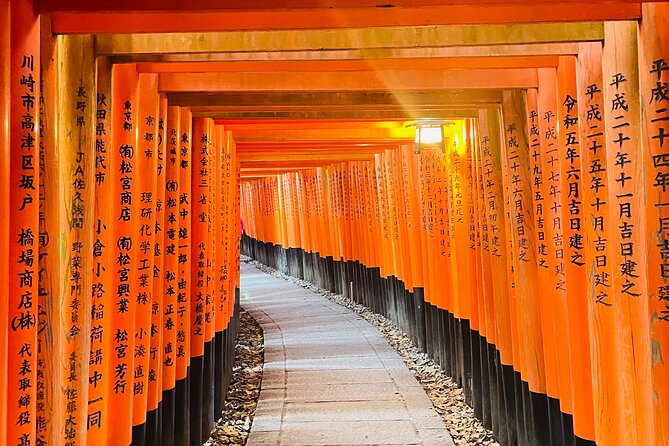
The Senbon Torii is the sight most people associate with Fushimi Inari. Thousands of vermilion gates form a long passage up the mountain, creating the bright tunnel seen in photographs of Kyoto.
The tour does not treat the torii gates as the entire experience. That is an advantage. By the time you reach them, you have already seen temple gardens, a viewpoint, and small shrines. The gates become part of a larger story about worship and pilgrimage.
You should still expect people here. Fushimi Inari is one of Kyoto’s best-known sights, and the famous lower sections can be busy. The route’s quieter paths help, but no guide can guarantee an empty torii tunnel.
Your guide can help you move through the area with less confusion and explain the fox statues and shrine symbolism. This is where English-language guidance has particular value, since the visual details are easy to photograph but not always easy to interpret.
The main shrine and ending at the Outer Oratory
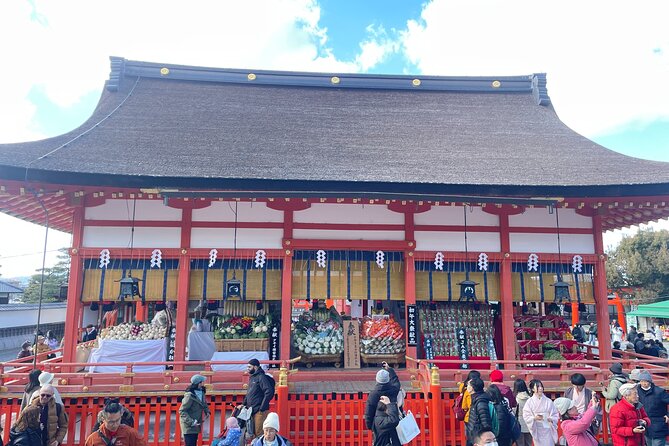
The final listed stop is Fushimi Inari Taisha’s main shrine, or honden. The visit lasts about ten minutes and admission is free.
Many people rush toward the torii gates and barely pause at the main shrine. Taking time here gives you a better understanding of Fushimi Inari as an active place of worship, not only a scenic trail.
The tour ends at the Outer Oratory at Fushimi Inari, at 58 Fukakusa Yabunouchichō. You are not returned to the original meeting point. That is convenient if you want to continue exploring Fushimi Inari, eat nearby, or use public transportation from the shrine area.
It is less convenient if you need to retrieve something from Tofukuji or have a fixed appointment back there. Plan the rest of your day from the ending point, not the starting point.
What the guides add to the experience
The strongest feature of this tour is its human side. Mika is praised for using notes and clear explanations, while Kenta is noted for adjusting the pace and responding thoughtfully to questions. Naomi is described as informative and willing to explain the details.
The exact guide for your date is not guaranteed, so book this for the format and route rather than for a specific person. Still, the pattern is clear: the guides focus on history, religion, and practical movement through the sites.
A small group helps here. With no more than eight people, you can ask about a garden, a shrine custom, or a detail on a building without holding up a large crowd. You also have a better chance of walking at a comfortable speed.
The tour runs in rain or shine. Kyoto weather can change quickly, and the route includes outdoor paths, bridges, and uphill walking. Bring suitable clothing and accept that the garden and shrine experience may feel different in wet weather.
Is $78.83 a fair price?
The price is reasonable if you value structure and interpretation. Most stops do not charge admission, so you are paying mainly for the guide, route planning, small group, and cultural explanation.
If you are comfortable navigating Kyoto alone, you can visit Tofukuji and Fushimi Inari for much less. You could also spend longer at Komyo-in or walk farther up the mountain. The tradeoff is that you would need to research the route and locate the less obvious shrines yourself.
I see this tour as good value for a first Kyoto visit, particularly if you have only a few days. It combines a major temple, a Zen garden, a scenic hike, and Fushimi Inari in about four hours. That is a lot of useful orientation in one morning.
The price is harder to justify if you dislike guided walks, want a slow private visit, or are mainly interested in photographing the torii gates. In those cases, visit Fushimi Inari on your own and spend your money elsewhere.
Who should book this Kyoto walk?
You should consider booking if you want:
- A first look at Kyoto’s Zen temples and Shinto shrines
- A small group instead of a large bus-style outing
- Help finding quieter paths around Fushimi Inari
- Clear English explanations of history, religion, and shrine customs
- A morning activity that ends at a major sight
- A moderate hike with several scenic pauses
You may want another option if you have difficulty walking uphill, want a completely private experience, or prefer to set your own timing. The tour requires moderate fitness, and the four-hour schedule leaves limited time for long personal stops.
Free cancellation is available up to 24 hours before the 9:00 am start. Changes or cancellations inside that window are not accepted for a refund.
Should you book it?
I would book this tour if you want more than a quick photograph at Fushimi Inari. The quiet garden at Komyo-in, the view from Yotsuji, and the small shrines give the morning more depth than a standard torii-gate visit.
The strongest reason to choose it is the combination of route and guide. You get a well-planned walk, a group capped at eight, and guides such as Mika, Kenta, or Naomi who can explain what you are seeing in plain English.
Skip it if you want a flat walk or complete independence. For most first-time visitors who can manage the uphill sections, this is a smart way to connect Tofukuji and Fushimi Inari without losing the quieter side of Kyoto.
FAQ
How long is the Kyoto walking tour?
The tour lasts approximately four hours.
What time does the tour begin?
The tour starts at 9:00 am.
Where does the tour meet?
It meets at the FamilyMart near Tofukuji, at 12-chōme-232 Honmachi, Higashiyama Ward, Kyoto, 605-0981, Japan.
Where does the tour finish?
It ends at the Outer Oratory of Fushimi Inari Shrine, at 58 Fukakusa Yabunouchichō, Fushimi Ward, Kyoto, 612-0882, Japan.
How many people can join the tour?
The group has a maximum of eight people.
Is the tour suitable for people who do not walk much?
The tour requires moderate physical fitness and includes a moderate amount of walking and uphill hiking. Comfortable walking shoes are recommended.
Does the tour run in bad weather?
Yes. The tour takes place rain or shine.
Are admission tickets included?
Admission is included for Komyo-in Temple. The listed stops at the shrines and Fushimi Inari are free.
Can I cancel for a full refund?
Yes. You can cancel at least 24 hours before the local start time for a full refund. Cancellations or changes made less than 24 hours before the start are not refunded.
More Garden Walks in Kyoto
- Marrakech: Ben Youssef, Secret Garden, & Souks Walking Tour
★ 4.6 · 2,802 reviews - Sintra & Cascais Day Tour with Pena Palace Entry and Gardens Walk
★ 5.0 · 962 reviews - Versailles Château and Gardens Walking Tour
★ 4.5 · 727 reviews - Giverny Village Walking Tour & Skip-the-Line to Monet Garden
★ 4.0 · 595 reviews
Just added around Kyoto
- Kyoto-Nara Adventures Private Tour With Hotel Pick Up★ 4.0 · 5 reviews
- Ikebana Traditional Japanese Art of Flower Arranging★ 4.5 · 19 reviews
- Traditional Japanese Flower Styling Workshop – Ikebana in Kyoto★ 5.0 · 10 reviews
- Stunning Private Tea Ceremony: Camellia Garden Teahouse★ 5.0 · 28 reviews
- Zen Garden Making and Matcha Tasting in Handmade Pottery Shop★ 3.5 · 2 reviews
- Kyoto Hidden Treasures: Special Temple & Garden Access Tour★ 4.5 · 25 reviews
- Guided Kyoto City Cherry Blossom One Day Private Tour★ 5.0 · 16 reviews
- Kyoto: Kinkaku-ji Temple & Serene Garden Guided Tour with Tickets★ 5.0 · 9 reviews
Japanese & Zen Garden Tours, compared.
Lafcadio Hearn Japanese Gardens Admission Adult Ticket
Read our review →
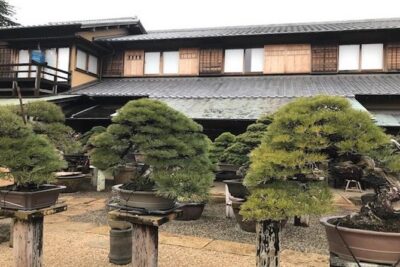
Make Your Own Bonsai with a Professional Bonsai Artist in Tokyo
Read our review →
Experience Crafting a Flower-Adorned Mini Japanese Garden
Read our review →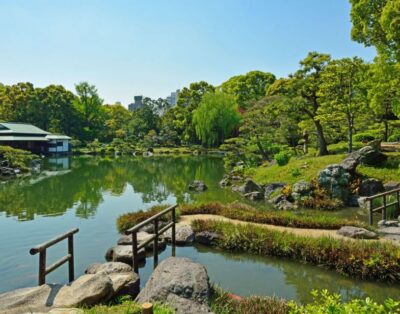
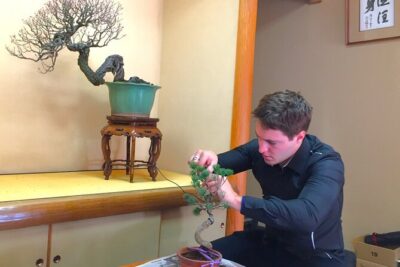
Bonsai Tour & Experience at the Most Sacred City for Bonsai in JP
Read our review →
Kyoto Japanese Garden Lover’s Private Tour with Government-Licensed Guide
Read our review →Browse the lists this tour appears in