
Review · KYOTO
Kyoto ITALIAN GUIDE Golden Pagoda Bamboo Forest Dry Garden
Kyoto’s famous sights come in one tidy morning here: Kinkakuji’s Golden Pagoda, Arashiyama’s towering bamboo, and the old Togetsukyo Bridge. A native Kyoto guide leads you by public transport and on foot, adding context about imperial families, aristocrats, writers, and samurai who once lived around this quieter edge of the old capital.
I like the sensible route and the small maximum of 15 people. I also like that the tour connects grand landmarks with the natural setting around them, rather than treating each stop as a quick photograph. The main catch is crowding, especially at Kinkakuji and the bamboo forest, and the advertised dry garden does not appear among the three stated stops, so confirm that detail before booking.
Key points at a glance
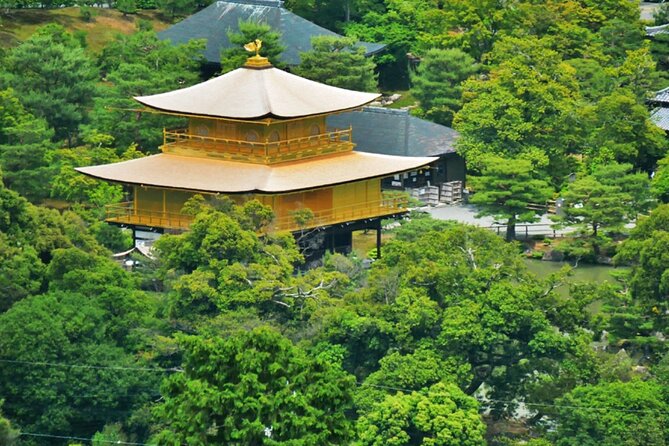
- Kinkakuji included: Spend about 90 minutes at Kyoto’s gold-covered temple complex, with admission included.
- Three major sights: The route covers Kinkakuji, Bamboo Forest Street, and Togetsukyo Bridge.
- Public transport experience: The tour uses trains, buses, and walking, giving you a practical look at how Kyoto’s sights connect.
- Small-group limit: A maximum of 15 people makes questions and guide interaction easier than on a large coach outing.
- Early 8:30 am start: The morning schedule gives you a better chance of seeing the main sights before the day grows busier, though no quiet visit is guaranteed.
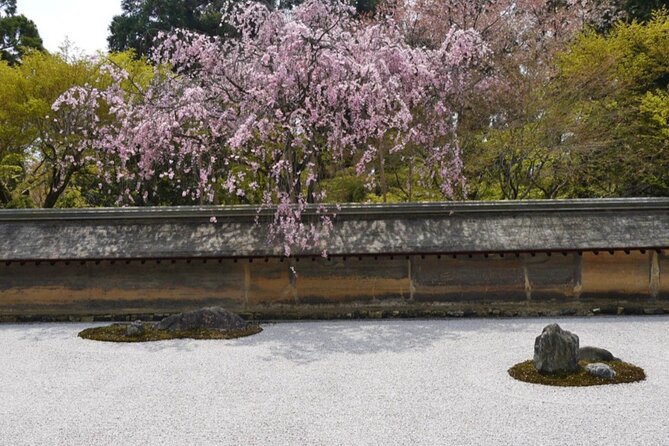
- Important title check: A dry garden is named in the experience title, but it is not listed as a stop in the supplied route.
A morning across Kyoto’s northwestern edge
This is not a single-temple visit. It is a cross-town look at three of Kyoto’s best-known sights, linked by the old northwestern suburbs of the city. The guide’s job is to explain how this area served as a retreat for members of the imperial family, aristocrats, writers, and samurai, while also helping you handle the practical business of getting from one place to the next.
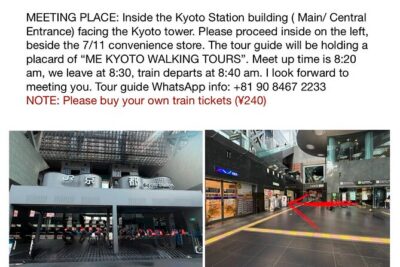
You meet at Kyoto Station at 8:30 am and return there when the outing ends. The total time is about four hours and 30 minutes. That makes this a useful choice if you want a strong introduction to western Kyoto without giving up an entire day.
The group can have up to 15 people. That is small enough for a guide to answer questions and keep the walking group together, but it is not a private tour. The pace also includes public transportation, so you should be ready for a moderate amount of walking and transfers.
A few more garden visits around Kyoto worth a look
- Kyoto Guided Walking Tour: Secret Zen Garden and Fushimi Inari
★ 5.0 · 17 reviews - Guided Kyoto City Cherry Blossom One Day Private Tour
★ 5.0 · 16 reviews - Kyoto Japanese Garden Lover’s Private Tour with Government-Licensed Guide
★ 4.5 · 10 reviews
Kinkakuji: gold, water, and a complicated past
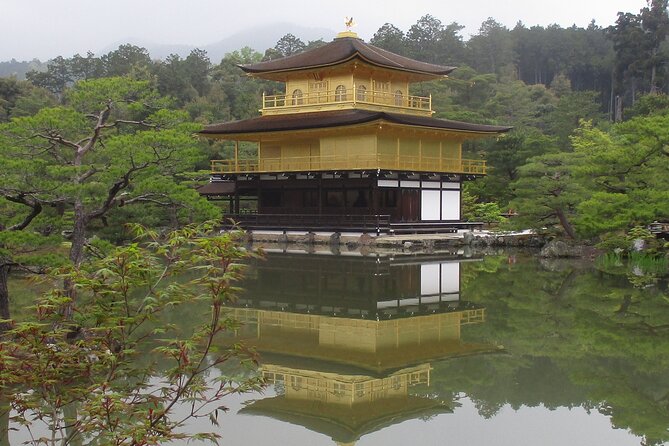
The first major stop is Kinkakuji, usually called the Golden Pagoda. The building was created in the 14th century at the request of shogun Yoshimitsu Ashikaga as part of his private villa. Its setting is as important as its shining exterior, with the pagoda placed beside water and trees in a carefully arranged temple garden.
You have about 90 minutes here, and admission is included. That is a useful amount of time for seeing the main view, walking through the grounds, and hearing the guide explain why the site mattered to Kyoto’s ruling class. The visit is not just about a pretty gold building. It reflects the old custom of powerful people creating retreats where politics, art, religion, and private life could meet.
There is one important bit of historical context. The present pagoda is a reconstruction because the original burned in 1955. The bright finish can also surprise you. One review found it too shiny for the quiet ideals often associated with Zen Buddhism, while another praised the temple and its forest setting as worthy of its UNESCO World Heritage status.
I would treat both reactions as useful warnings. Kinkakuji is visually striking, but it is not a simple untouched relic from the 14th century. The gold surface is designed to catch your eye, and the current building belongs to a later period than the original. If you want a hushed spiritual visit, the crowds may disappoint you. If you want one of Kyoto’s most recognizable views and a clear explanation of its past, the stop earns its place.
The timing helps, but it does not remove the crowd problem. Kinkakuji can feel crowded enough that the calm suggested by the garden is hard to find. Keep your expectations realistic, listen for the guide’s explanation, and take your best photograph when the viewing area opens up rather than waiting for perfect silence.
Bamboo Forest Street: famous, tall, and often busy
The second stop is Bamboo Forest Street in Arashiyama. You have about an hour to walk through the most famous bamboo grove in Japan, a place recognized around the world and used as a setting for films.
The bamboo changes the mood after Kinkakuji. Instead of looking across a formal pond toward a decorated temple, you walk beneath tall green stalks that narrow the view and create a strong sense of height. It is one of Kyoto’s most memorable settings, even when the path is busy.
The free admission keeps the cost of this stop low, but free access also means you should not expect an exclusive visit. The grove is one of the city’s major draws, and the experience depends heavily on how many people are there when you arrive. An early start may help, but the tour does not promise an empty path.
The guide adds value by placing the grove within the old suburban setting of Kyoto. The tour is meant to show more than a famous photo location. It connects the natural surroundings with the area’s past as a retreat for nobles and men of letters. Ask questions as you walk. The guide is specifically there to discuss history, culture, and daily life in both old and modern Japan.
One hour is enough for a focused walk, but it is not generous if you want a slow photo session. You will need to follow the group and keep an eye on the meeting arrangements. If the bamboo is your main reason for booking, check in advance how much free time you will have within that hour.
Togetsukyo Bridge and the Arashiyama setting
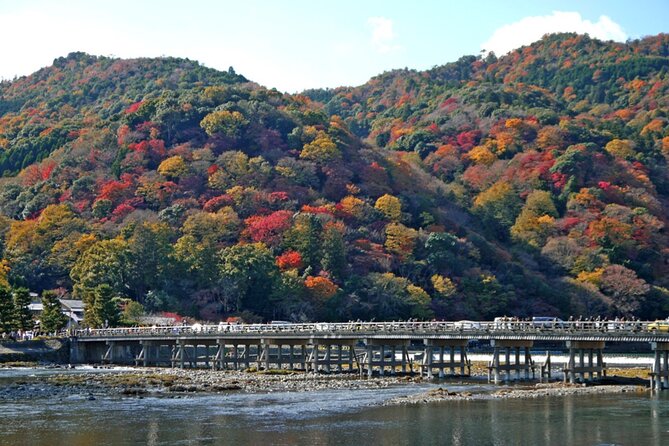
The last listed stop is Togetsukyo Bridge, where you spend about an hour walking and viewing the preserved historic setting around Arashiyama. The bridge has existed since the ninth century, giving this part of the route a connection to Kyoto’s early suburban life.
The bridge itself is not a museum object that you simply look at and leave. It works as a viewpoint across the surrounding area and as a practical link through Arashiyama. The guide can explain why this district appealed to the imperial household, aristocrats, writers, and other figures who sought a retreat from the center of the ancient capital.
I like the way this stop broadens the tour. Kinkakuji gives you architecture and courtly power. The bamboo gives you a famous natural setting. Togetsukyo gives you a wider view of the preserved surroundings and shows how the area functions as a historic suburb rather than a collection of isolated attractions.
The one-hour allocation should allow a relaxed walk, but the experience will still depend on the group’s pace and the conditions on the day. The route description does not promise a particular view, special bridge access, or a meal stop. Think of this as time to see the bridge and its setting, hear the local story, and finish the route at a measured pace.
Same place, a different kind of green day out:
- Kyoto Zen Meditation & Garden Tour at a Zen Temple with Lunch
★ 5.0 · 441 reviews - Kyoto Arashiyama Bamboo forest & Garden Half-Day Walking Tour
★ 5.0 · 413 reviews - Authentic Kyoto Tea Ceremony: Camellia Flower Teahouse
★ 5.0 · 269 reviews - Kyoto: Zen Garden, Zen Mind (Private)
★ 5.0 · 126 reviews
Why the guide matters on this route
A native Kyoto guide is the heart of the experience. These sights are easy to photograph without understanding how they fit together. The guide is expected to explain the history, culture, and daily life of old and modern Japan, while also helping with any assistance needed during the tour.
That local point of view is especially useful because the route crosses several different types of Kyoto. Kinkakuji reflects the world of the shogun and elite villa culture. Arashiyama brings in bamboo, retreat life, and the scenic traditions of the old capital. Togetsukyo helps tie the area together as a historic suburb.
No individual guide’s name is provided, so you cannot choose a particular guide in advance. The operator does say that flexible itineraries and times can be considered on request when possible. I would ask before booking if you have a firm interest in the dry garden mentioned in the title, since the detailed route names only the Golden Pagoda, Bamboo Forest Street, and Togetsukyo Bridge.
Getting around by train, bus, and foot
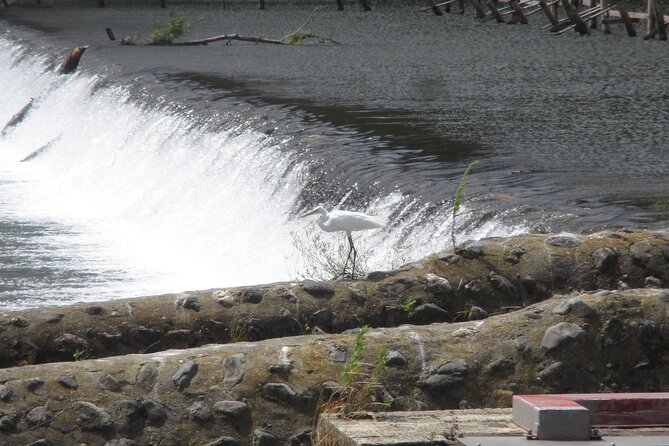
The transport style is part of the lesson. Rather than staying inside a private vehicle, you move through Kyoto by train, bus, and on foot. That can make the morning feel more connected to everyday city life, but it also means the tour is affected by public transport, walking distances, and the group’s ability to move together.
The starting point is Kyoto Station, at Higashishiokoji Kamadonocho in Shimogyo Ward. The tour ends back at the same meeting point. Since the activity is near public transportation and begins early, plan to arrive with enough time to find the meeting point without rushing.
A moderate fitness level is required. The data does not provide an exact walking distance or a detailed breakdown of transfers, so I would not book this expecting a seated sightseeing trip. Wear practical shoes and be ready to walk between transport points and attractions.
The mobile ticket is convenient, but it does not replace careful planning. Keep your booking confirmation available on your phone, and make sure your device is charged for the morning.
Is $113.85 a fair price?
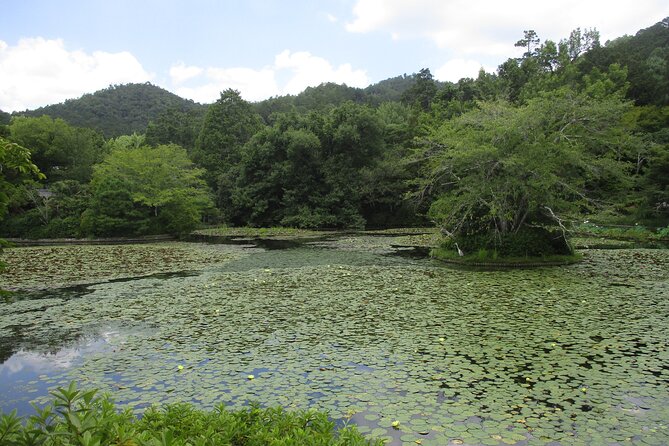
At $113.85 per person, this is not the cheapest way to see these three sights. The value depends on what you want the guide and transport structure to do for you.
The price includes admission to Kinkakuji, while the bamboo forest and Togetsukyo Bridge have no admission charge. No separate statement says that public transport fares, meals, or other expenses are included, so you should confirm those details before paying. The cost is easier to justify if you want a local guide to organize the route, explain the historical setting, and answer questions as you go.
The four-and-a-half-hour length is another part of the value. You are paying for a compact morning with three major stops, rather than spending time working out the connections yourself. The group limit of 15 is also more appealing than a large group, though it does not make the outing private.
I would compare the cost with your own comfort level. If you are confident using Kyoto’s trains and buses and mainly want photographs, visiting independently may cost less. If you want help making sense of the sites and prefer a planned route with a guide, the price may be reasonable.
Crowds, authenticity, and what to expect
The biggest weakness is the gap between the peaceful image of these places and the crowds you may encounter. One direct assessment found Kinkakuji extremely overcrowded and felt that the controlled calm of the site was lost when too many people were admitted at once.
That criticism is worth taking seriously. A tour can improve your understanding of a place, but it cannot control visitor numbers. Kinkakuji may feel more like a major attraction than a quiet Zen retreat. The bamboo forest is also globally famous, so its paths may be busy rather than solitary.
The question is what kind of authenticity you want. This route does not promise a secret corner of Kyoto. It gives you real historic places that remain central to the modern sightseeing circuit, with a local guide helping you see their older role in the city.
The early start is a sensible feature. It gives the group a chance to reach the sights in the morning, although the available information does not guarantee low crowds. If peace and quiet matter more to you than seeing the famous landmarks, you may prefer a less popular temple or a private visit at a different time.
Who should book this Kyoto morning?
I would recommend this tour to a first-time Kyoto visitor who wants three major sights explained in one manageable outing. It also suits anyone who would rather not work out the public transport connections alone, and people who enjoy asking questions about Japanese history and culture.
Families and mixed-age groups should note the moderate fitness requirement and the walking involved. The small maximum of 15 may make it easier to stay together, but the route still uses public transportation and does not promise a slow pace for every participant.
I would be more cautious if you have already visited Kinkakuji and Arashiyama, dislike crowded attractions, or want a private and deeply quiet temple experience. I would also confirm the dry garden before booking, since it appears in the experience name but not in the stated three-stop route.
Free cancellation is available if you cancel at least 24 hours before the local start time. Changes or cancellations inside that window are not accepted for a refund, and the experience requires a minimum number of participants. If the operator cancels because that minimum is not reached, you are offered another date or experience, or a full refund.
Should you book this tour?
Book it if you want an efficient introduction to northwestern Kyoto, value a native guide, and accept that the Golden Pagoda and bamboo forest can be crowded. The strongest features are the clear three-stop route, the historical context, the included Kinkakuji admission, and the maximum group size of 15.
Skip it if your priority is solitude, independent wandering, or a guaranteed visit to a dry garden. Before paying, ask the operator to confirm that point and check what transport costs are covered. For the right kind of visitor, this is a practical way to see Kyoto’s most recognizable western sights without spending the whole day arranging the details yourself.
FAQ
Where does the tour start?
It starts at Kyoto Station, at Higashishiokoji Kamadonocho in Shimogyo Ward, Kyoto, 600-8216, Japan.
What time does the tour begin?
The scheduled start time is 8:30 am.
Where does the tour finish?
The tour ends back at the meeting point at Kyoto Station.
How long does the experience last?
The tour lasts approximately four hours and 30 minutes.
Which attractions are included?
The route includes Kinkakuji Temple, Bamboo Forest Street, and Togetsukyo Bridge.
Is admission included?
Admission to Kinkakuji Temple is included. The bamboo forest and Togetsukyo Bridge are listed without an admission charge.
How many people can join?
The activity has a maximum of 15 participants.
How do you travel between the sights?
The tour uses trains, buses, and walking.
Can I cancel for a full refund?
Yes. You can cancel for a full refund up to 24 hours before the experience start time. Cancellations or changes made less than 24 hours in advance are not accepted for a refund.
Just added around Kyoto
- Kyoto-Nara Adventures Private Tour With Hotel Pick Up★ 4.0 · 5 reviews
- Ikebana Traditional Japanese Art of Flower Arranging★ 4.5 · 19 reviews
- Traditional Japanese Flower Styling Workshop – Ikebana in Kyoto★ 5.0 · 10 reviews
- Stunning Private Tea Ceremony: Camellia Garden Teahouse★ 5.0 · 28 reviews
- Kyoto Hidden Treasures: Special Temple & Garden Access Tour★ 4.5 · 25 reviews
- Zen Garden Making and Matcha Tasting in Handmade Pottery Shop★ 3.5 · 2 reviews
- Guided Kyoto City Cherry Blossom One Day Private Tour★ 5.0 · 16 reviews
- Kyoto: Kinkaku-ji Temple & Serene Garden Guided Tour with Tickets★ 5.0 · 9 reviews
Kyoto Garden Tours, compared.
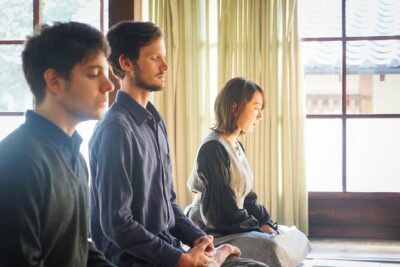
Kyoto Zen Meditation & Garden Tour at a Zen Temple with Lunch
Read our review →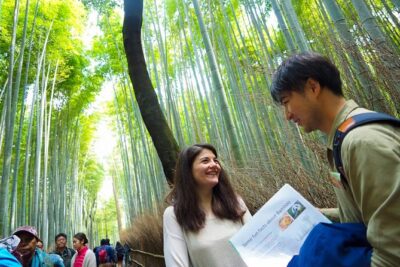
Kyoto Arashiyama Bamboo forest & Garden Half-Day Walking Tour
Read our review →
Authentic Kyoto Tea Ceremony: Camellia Flower Teahouse
Read our review →
Kyoto Kiyomizu Tea Ceremony with Scenic Garden Views
Read our review →
Stunning Private Tea Ceremony: Camellia Garden Teahouse
Read our review →Browse the lists this tour appears in